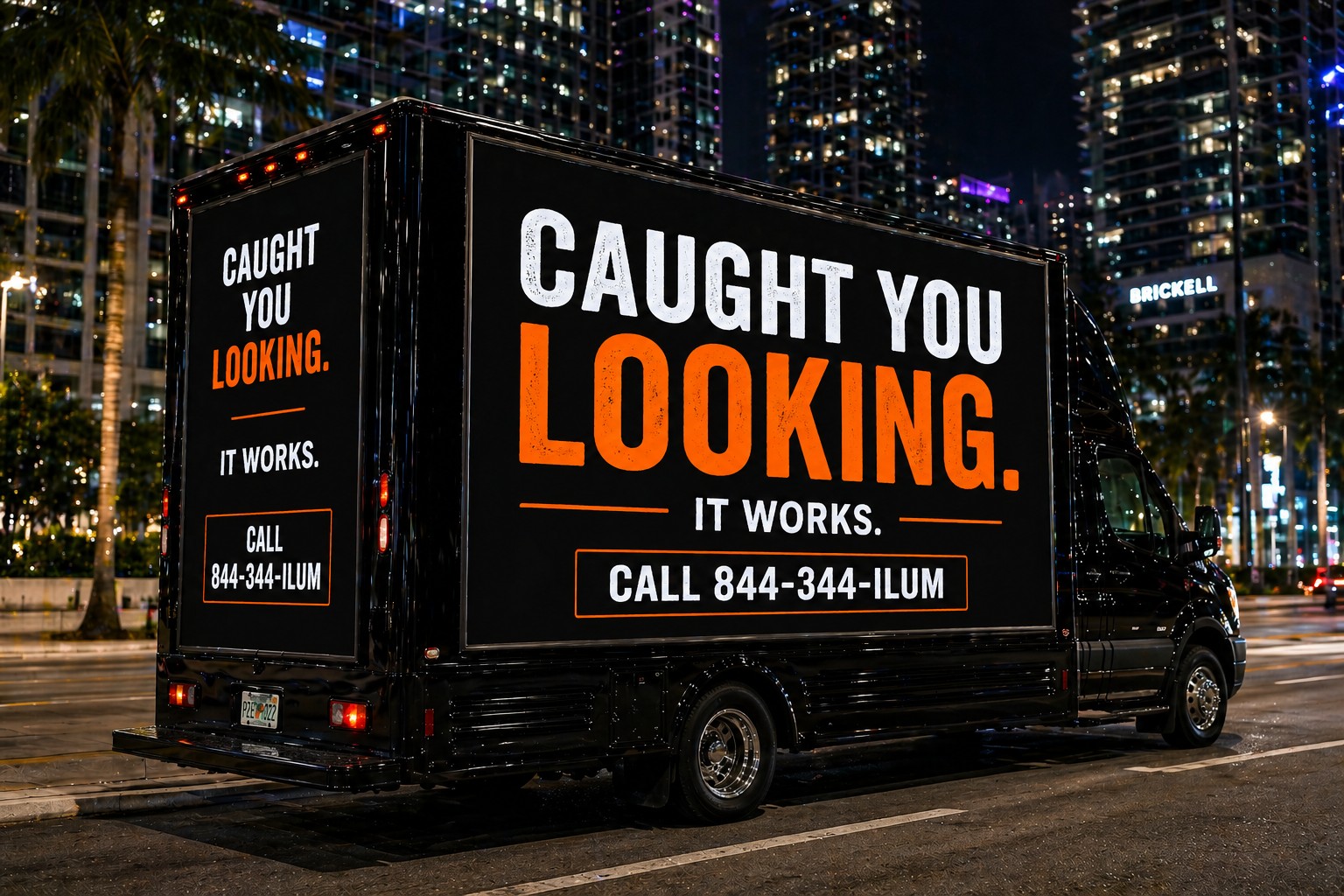
A moving billboard can interrupt the familiar pattern of a street without asking people to open an app or look away from their surroundings. But a truck simply driving around is not a campaign strategy. The stronger approach pairs a short, legible message with a deliberate route, useful dayparts, and a way to measure what happened next.
Why the format can stand out
It appears in the places your audience already visits
A static sign is tied to one location. A mobile LED truck can be scheduled near shopping, entertainment, business, convention, or event areas, subject to local rules and safe operating conditions. That flexibility lets a campaign follow a useful audience pattern rather than relying on a single fixed view.
It can match the moment
Launch day, a conference, a game, or a busy weekend changes where people gather. Routes and operating hours can be planned around those moments. Creative can also change by campaign phase: introduce the brand first, then point to an offer, opening, or next step. Changes should be planned with the operator and checked for legibility on the truck’s screens.
It can make other marketing easier to notice
Someone who sees the truck may later recognize the brand in a search result, social post, or storefront. That is a reasonable campaign hypothesis, not a guaranteed lift. Use a simple landing page, memorable URL, unique QR destination, or tracked inquiry source so you can look for signals instead of attributing every sale to the truck.
How to launch a moving billboard campaign
1. Define one outcome
Is the goal event attendance, a store opening, brand awareness, qualified calls, or visits to a campaign page? A clear goal tells you which districts, hours, and creative to prioritize. Avoid trying to make one ad serve every audience at once.
2. Choose the market and audience windows
List the city, relevant neighborhoods, venue or event dates, and the hours your audience is likely to be nearby. Ask the campaign team to build a feasible route that accounts for congestion, permitted roads, loading, closures, and operating restrictions. For example, a convention audience and a beach visitor audience may need different time blocks even within the same city.
3. Decide between shared and exclusive
A shared rotation can make sense when your brand fits an established route and you are comfortable sharing screen time. An exclusive truck gives one advertiser more control over the schedule, creative, and operating area. In Miami, ELITE 305 Miami is the shared-program option. For a custom route in Fort Lauderdale or another market, review exclusive mobile billboard campaigns.
4. Build creative for the street
Use a short headline, strong contrast, a recognizable brand mark, and one next step. Keep phone numbers or URLs easy to remember. A QR code may help when the truck is stationary or viewed by pedestrians, but it should not be the only way to respond; never design an ad that encourages drivers to scan while driving.
5. Agree on delivery and reporting
Before launch, confirm scheduled operating hours, truck count, screen rotation, route-planning assumptions, creative deadlines, and what proof of performance is included. GPS documentation can show where a truck operated; it does not by itself establish how many people saw an ad. Compare reporting against the actual campaign goal.
What should you send with a quote request?
Provide the market, preferred dates, audience, campaign goal, approximate duration, relevant events, and whether you want shared or exclusive service. If the route is still uncertain, say what kind of customer you need to reach. The route can then be planned around the audience instead of a list of streets.
Planning South Florida? Start with the Fort Lauderdale market guide or the Miami market guide for concrete district and audience ideas. Availability and final routes remain subject to review.
Make your next campaign move.
Tell us who you want to reach, where, and when. We will recommend a practical truck, route, and schedule.
Request a Campaign Quote