New York City makes outdoor advertising feel larger than life. Screens light up Times Square, theater marquees compete for attention, and a single block can bring together visitors, commuters and people heading to a show. For an advertiser, the challenge is deciding which part of that activity actually matters to the business.
A successful NYC campaign starts with a useful question: who do you want to reach, and what should they do after seeing your message? The answer shapes the format, location, timing and creative more than a famous skyline does.
Choose the audience before the landmark
A tourist looking for tonight’s entertainment has different needs from a professional attending a conference or a resident shopping near home. Start with the people you want to reach, then identify the places and moments relevant to them.
Times Square and the Theater District can suit entertainment and visitor-facing messages. Midtown offers contexts for business, retail and evening audiences. A convention campaign needs a plan around the specific show and its attendees. Borough-focused businesses may benefit from a narrower neighborhood approach rather than a Manhattan-centered campaign.
These are planning contexts, not guaranteed advertising locations or access promises. Confirm the available media inventory and operating conditions before committing your budget.
Fixed billboards, transit media and mobile displays
A fixed billboard offers a consistent presence in one location. A digital placement can provide scheduled screen time, but your message may share the display with other advertisers. Transit and street-level formats provide other ways to connect with people along their daily journeys.
Digital mobile displays can support flexible creative and street-level storytelling where the proposed operation is lawful and feasible. The format should be evaluated alongside fixed and transit options rather than assumed to be the right answer for every brief.
| Format | Planning question |
|---|---|
| Fixed billboard | Does this specific location serve the audience throughout the campaign? |
| Digital screen placement | What share of the rotation, display duration and schedule are included? |
| Transit or street-level media | Which journeys and neighborhoods does the inventory cover? |
| Mobile digital display | Is the specific vehicle operation permitted, and what delivery can be documented? |
What the Times Square photo teaches us
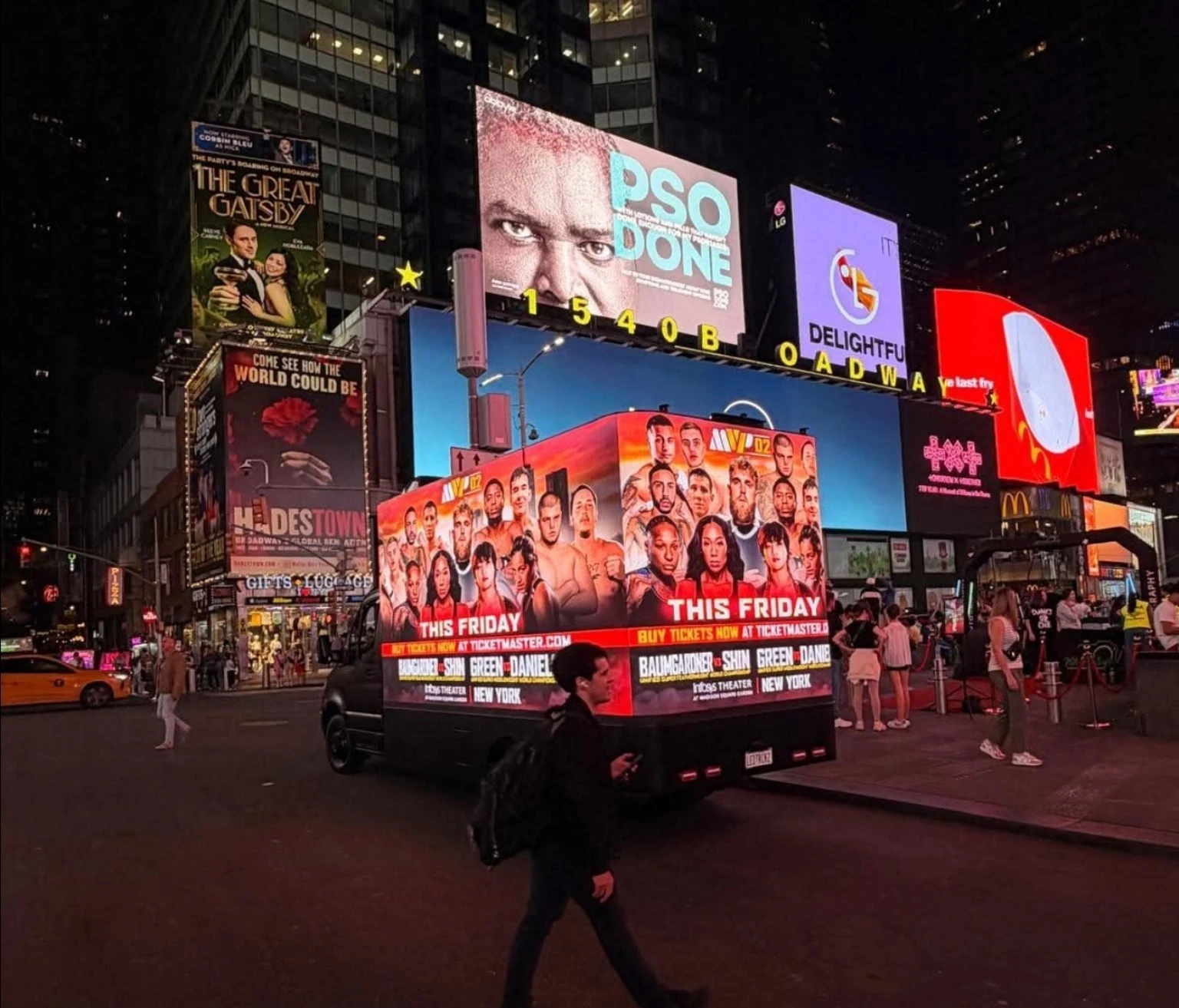
The opening photo shows boxing-event creative surrounded by established illuminated signs. The event message uses recognizable faces, a prominent timing cue and a ticketing call to action. It illustrates an essential creative principle: the viewer should understand the subject and next step quickly.
The photograph documents a visual example. It does not establish campaign results, venue affiliation or permission for a future operation at that location.
Make the message readable in a busy environment
Keep the headline short, give the brand a clear place and choose one primary action. A screen packed with details may look impressive on a laptop but become difficult to read from the sidewalk.
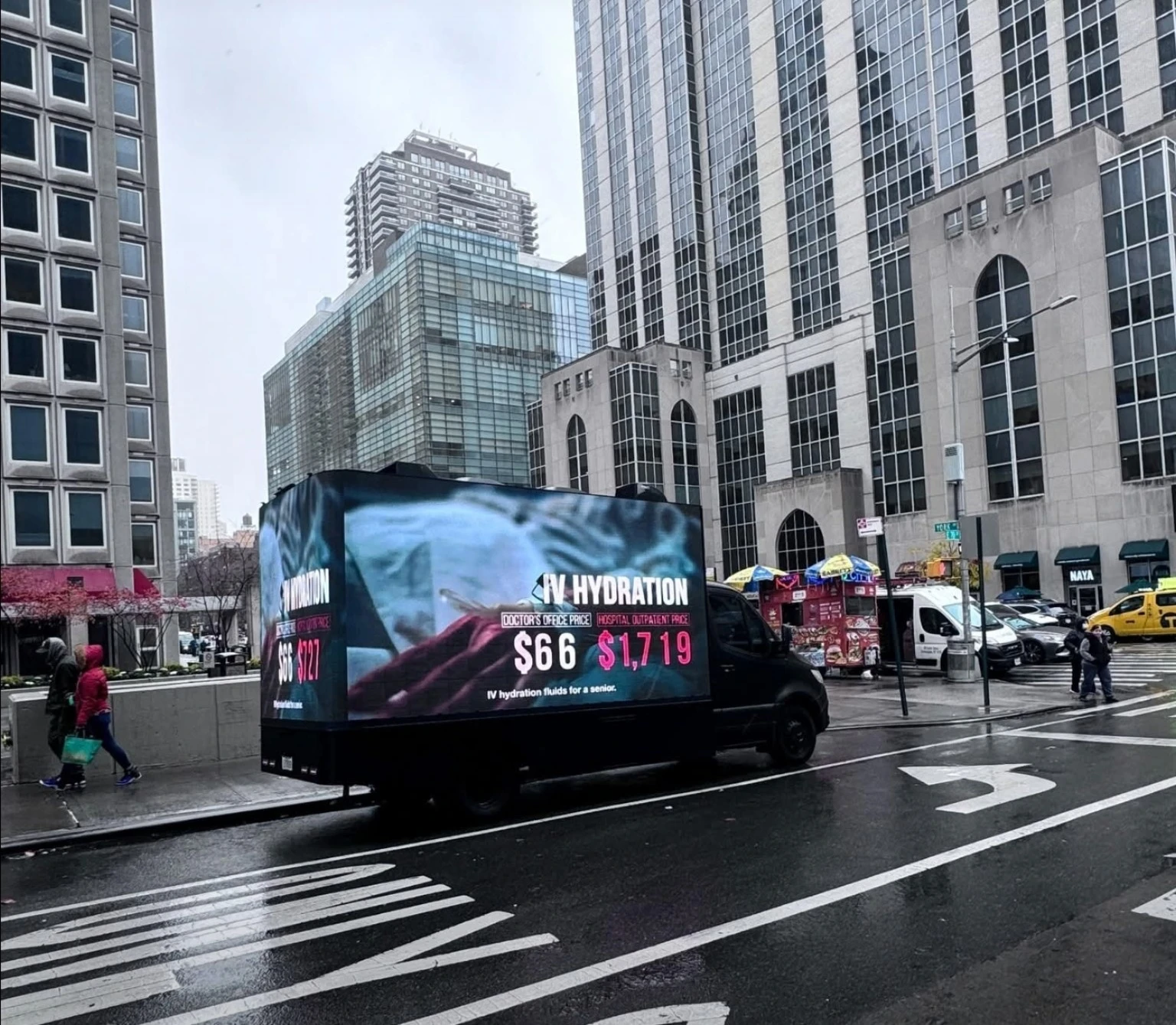
Review the artwork at the actual display dimensions. Check contrast, small type and the amount of time each message stays visible. For a local offer, include a useful location or short URL. For an event, make the date and action unmistakable. For healthcare or financial messaging, verify every factual claim and price before launch.
Plan for the occasion, not just the calendar
A concert promotion, product launch and business conference need different schedules. Work backward from the moment you want someone to act. An advance ticket campaign has a different job from a last-minute invitation, and a store opening should give people enough information to find the location.
Confirm event dates directly with the organizer and distinguish advertising near an event from official sponsorship or access to venue property. A recognizable backdrop in a photo does not create either relationship.
Understand NYC’s restrictions before booking a truck
New York City’s traffic rule 4-12(j) restricts operating, standing or parking vehicles on streets or roadways for commercial advertising, with specified exceptions. Ordinary traffic compliance alone does not establish that a dedicated advertising truck is permitted.
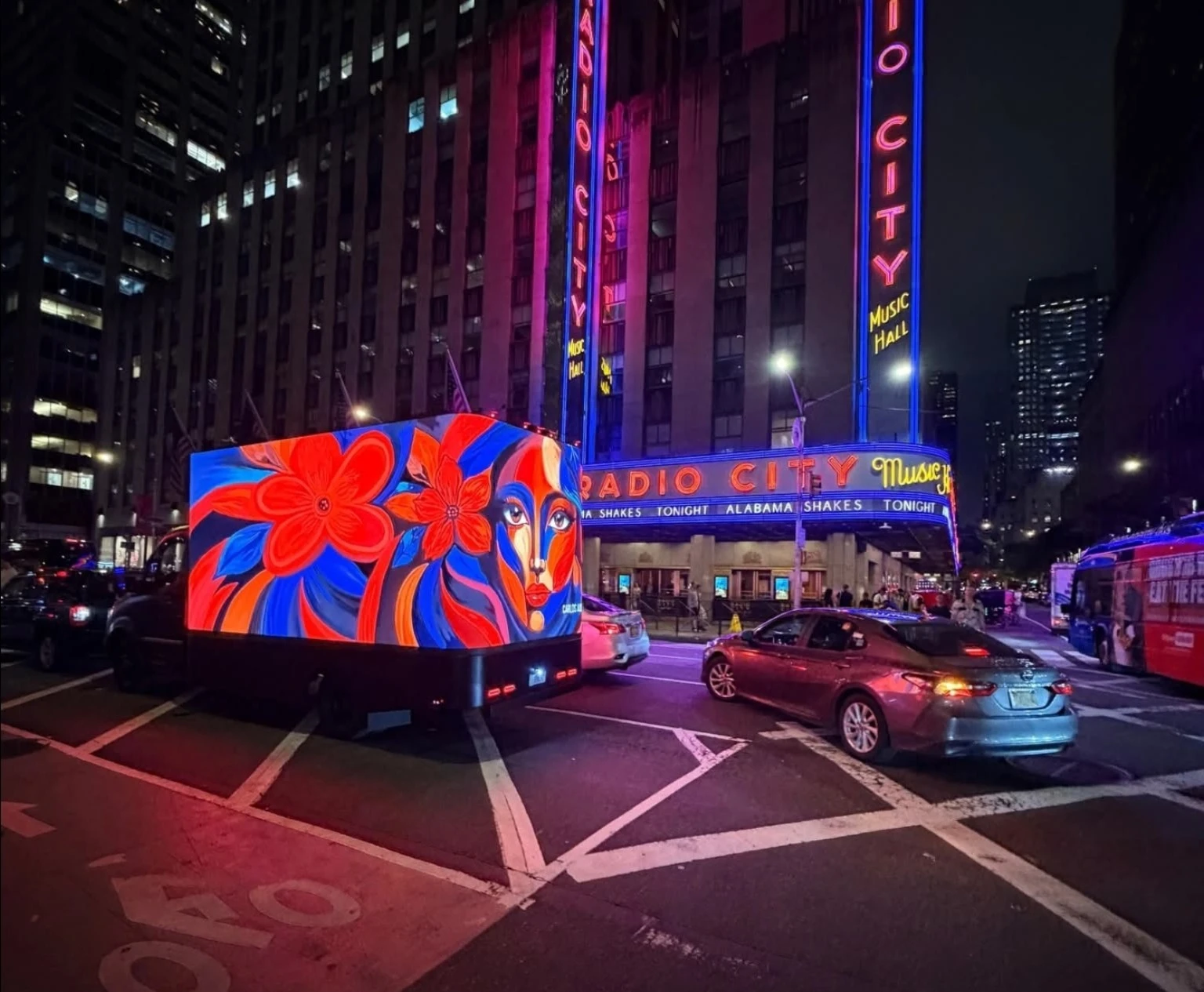
Any proposed mobile operation needs a specific review of the applicable rules, vehicle use and permissions before it is offered or booked. Where a proposed operation is not permitted, consider lawful fixed, transit or other approved media options. The photos are campaign examples, not evidence of legal authorization.
See the city’s published traffic rules, section 4-12(j) for the source text.
Ask for a quote that explains the delivery
NYC outdoor advertising does not have one universal price. Ask what the proposal includes: format, exact placement or approved operating area, dates, hours, number of units, screen rotation, creative production and reporting. Compare those details before comparing totals.
A low headline price is not useful if the schedule misses your audience or the deliverables are unclear. Ask about cancellation terms, creative deadlines and how changes in availability or operating conditions will be handled.
Connect visibility with a useful response
Give viewers a clear next step: find the event, visit the store, book a meeting or learn about the product. A short URL can help people respond later. A QR code can offer a direct path for people who can safely stop and scan; never design an action that asks drivers to use their phones.
Use a dedicated landing page and campaign tracking where practical. Review visits, inquiries and completed actions alongside documented delivery. A photograph confirms a photographed moment; it does not prove total reach, unique viewers or sales.
Start with a focused NYC brief
Share your audience, objective, dates, preferred neighborhoods, creative idea and budget range. A focused brief makes it easier to evaluate appropriate formats and develop a campaign with clear expectations.
Explore our New York City guide, see more campaign photos, or read about QR codes and digital mobile billboards.
Planning a New York campaign?
Tell us who you want to reach and when. We’ll review the brief, feasibility and suitable campaign options.
Discuss Your NYC Campaign