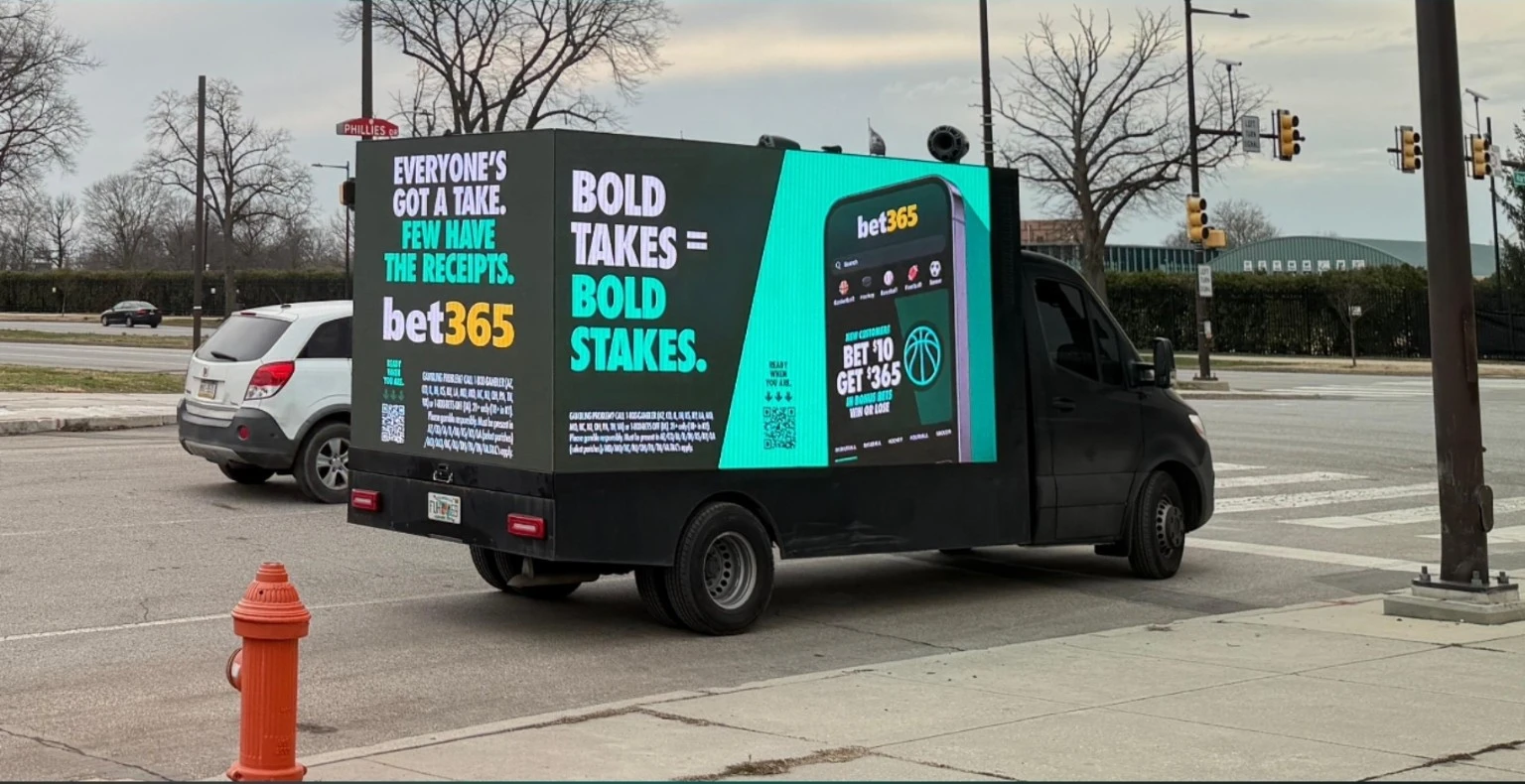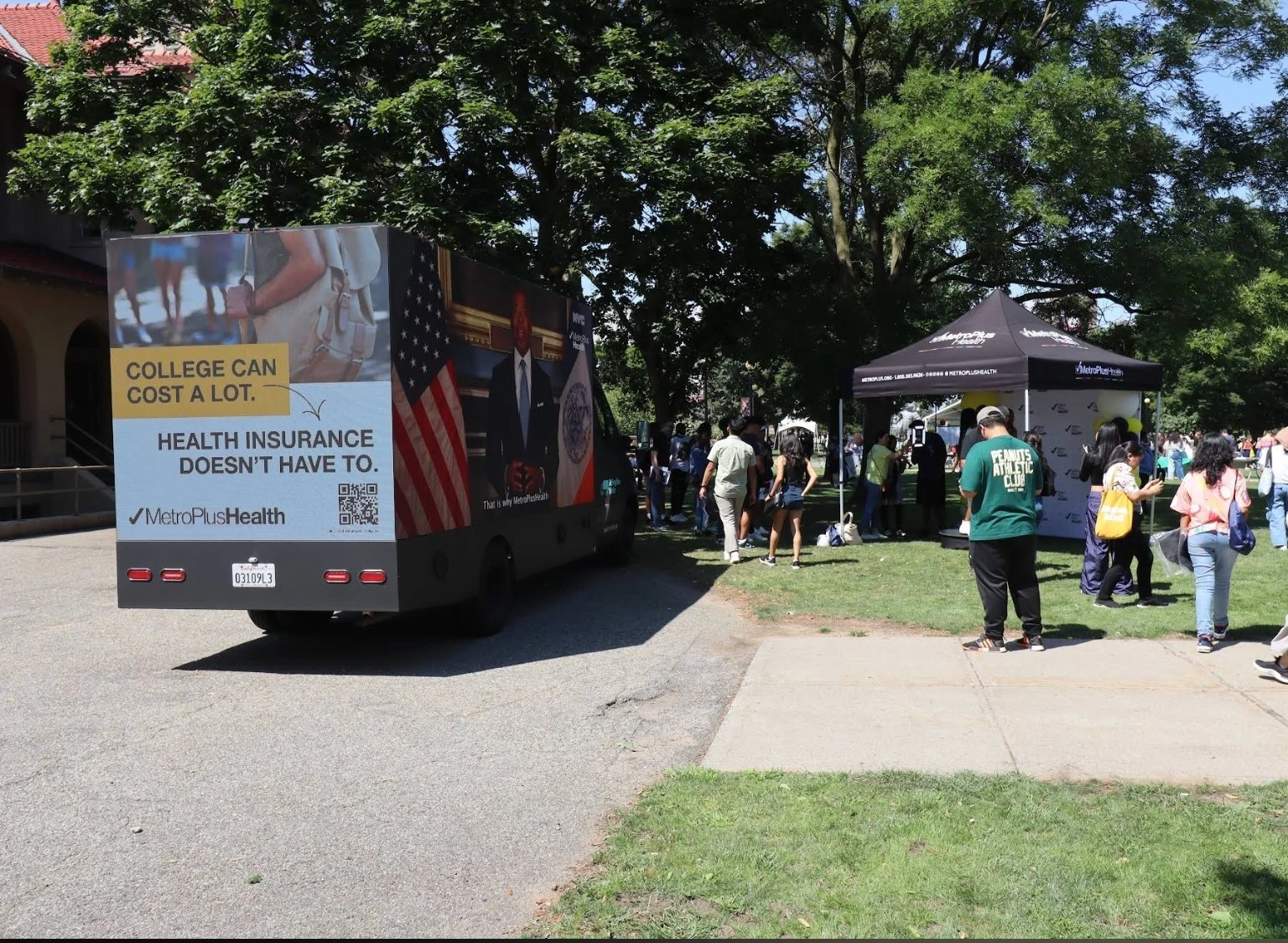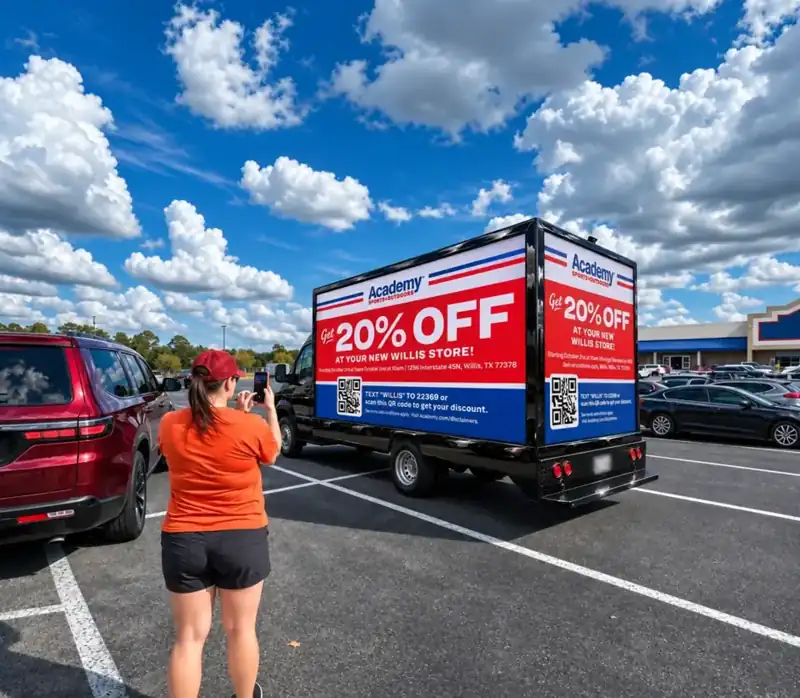
A digital mobile billboard creates a physical place for your message. A QR code gives an interested viewer a direct route to the information behind it. The useful combination is simple: a readable ad, a reason to respond and a phone-friendly destination.
QR codes can help because they remove a step: people do not have to remember and type a long web address. Their value depends on whether someone can safely scan, understands the offer and reaches a working page.
How the scan actually works
A QR code is a two-dimensional pattern that can encode a web address. In a website campaign, the truck screen displays that pattern; the viewer’s phone reads it and offers a link. The code itself does not need a battery or a connection to the viewer’s phone.
- Display: the approved creative shows the code beside one clear offer.
- Read: a safely stationary viewer opens a supported phone camera or scanner and frames the code.
- Open: the viewer taps the detected link; loading the website requires a working connection.
- Respond: the destination offers the promised booking, information, coupon or inquiry form.
Apple’s camera instructions describe the frame-and-tap process. Camera features vary by device.
Why this can work for an advertiser
The code connects a visible message with a specific action. It can shorten the path to an offer, keep the destination consistent with the creative and give a campaign its own response link. Those are practical advantages, not a promise of scans or sales.
From “I saw it” to “I want to know more”
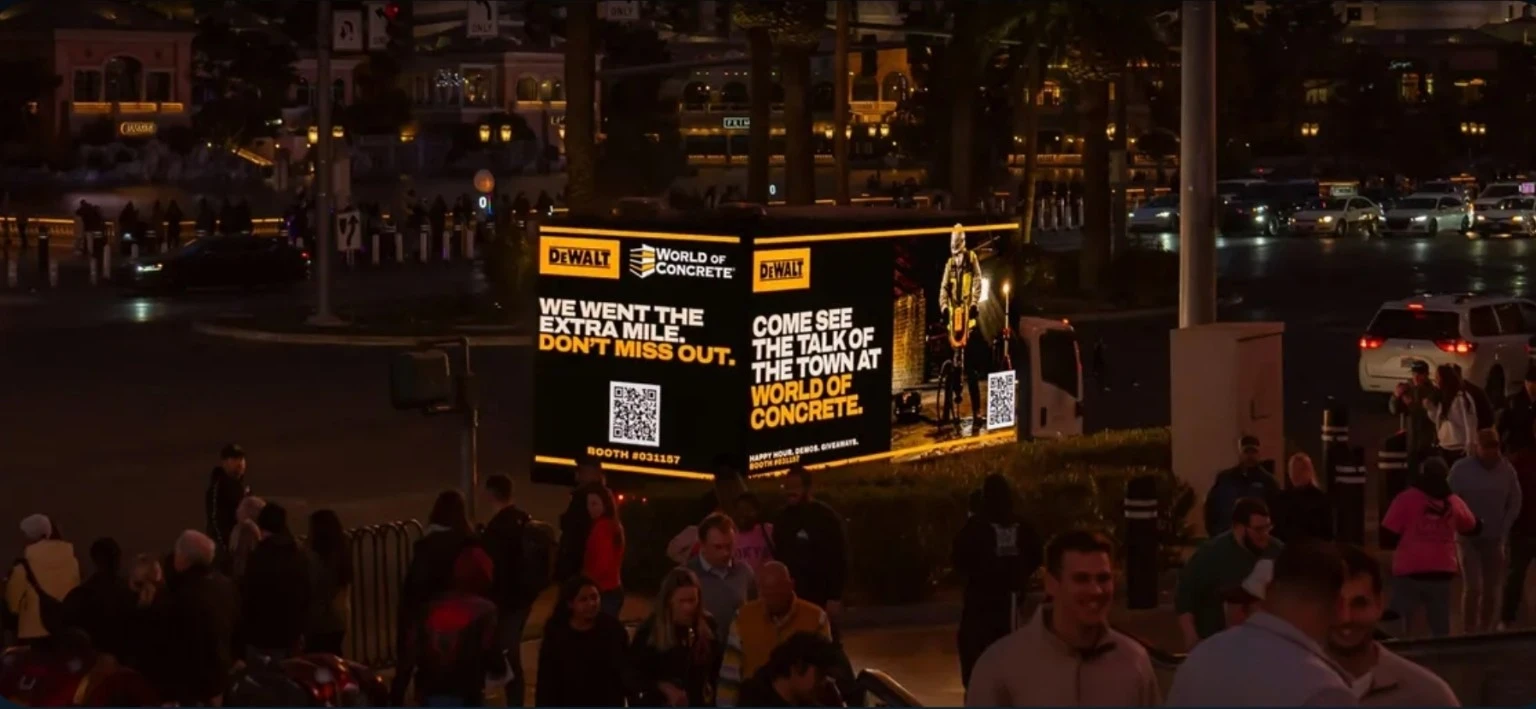
Someone walking out of a convention sees your product on a truck screen. Someone waiting near a restaurant notices your opening offer. An event guest spots an invitation to your booth. A QR code can take each person directly to the information the message promises, without asking them to remember a long web address.
The destination might be a reservation page, product demonstration, event registration, coupon or short inquiry form. Choose one action. A code that opens a busy homepage leaves the visitor to finish the work your advertisement should have done.
A real example from the photos
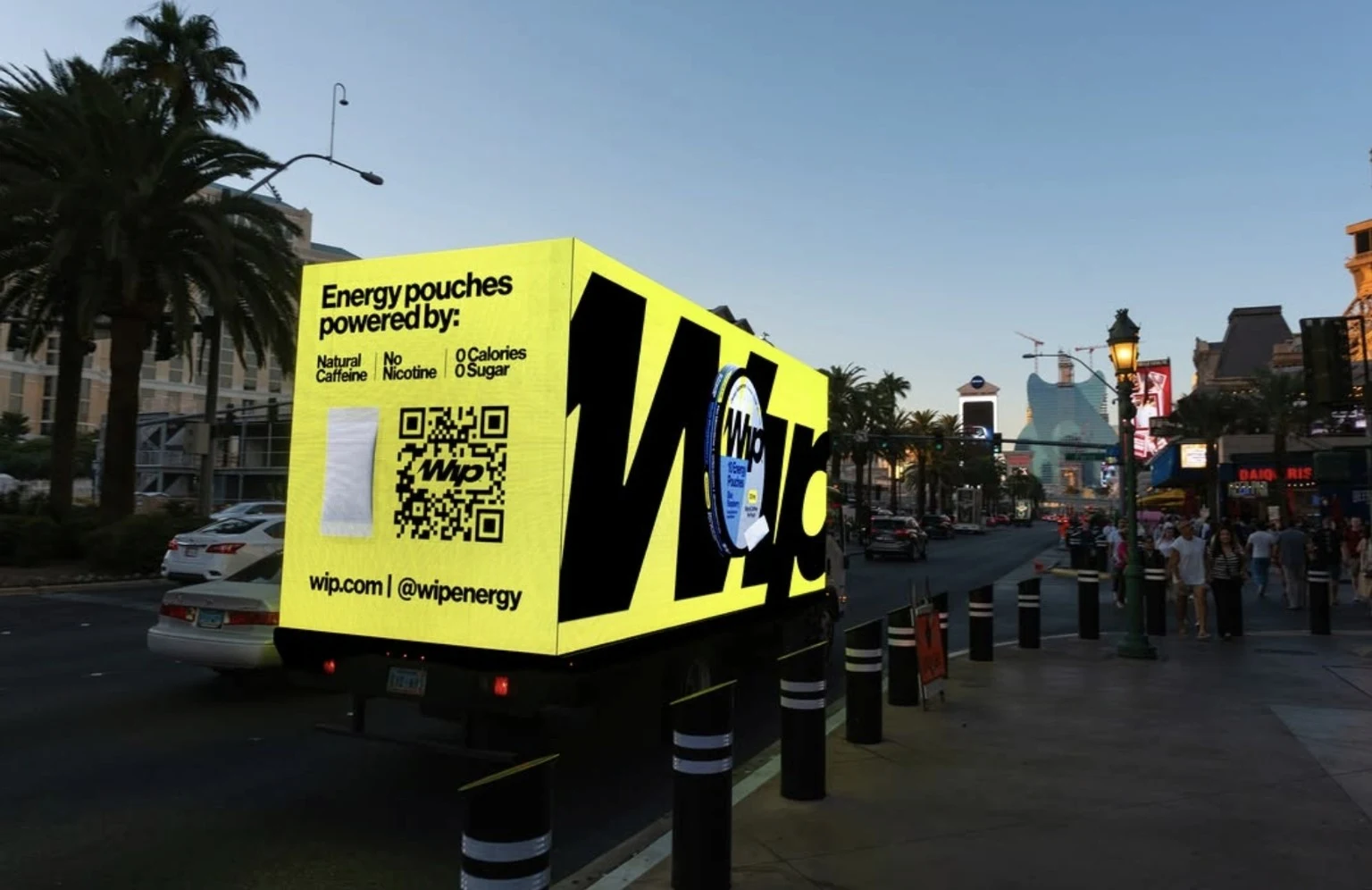
The Wip Energy truck pictured above shows the idea clearly. A prominent QR code sits on the rear screen beside the product message, with a short website address underneath. The bright creative attracts attention; the code offers a response path; the website gives people another way to find the brand later.
This is a visual campaign example, not a claim about its scan totals or sales. A visible code alone does not tell us how many people used it.
Give people a reason to scan
“Scan here” describes an action. “Scan for your opening-week offer” describes a benefit. The second gives people a clearer reason to reach for their phones.
For a convention, try an invitation to book a demonstration or find your booth. For a restaurant, link to the menu and reservation page. For an awareness campaign, offer a useful resource or a way to participate. Keep the promise specific, and make sure the page delivers it immediately.
Design for the street, then test on the street
Use a clear, high-contrast code with space around it. DENSO WAVE, the developer of QR Code, specifies a clear border four modules wide on every side. Keep nearby text and decorative elements outside that border.
Make the code large enough for the actual viewing conditions, and keep it visible long enough for a stationary pedestrian to notice and scan. There is no single screen size that guarantees a successful scan from every distance. Test the final creative on the truck screen with several phones, at realistic distances, angles and lighting conditions.
Plan scanning opportunities around people who can safely stop and look. Never ask drivers to use their phones while driving. Keep a short URL on the creative so people can respond later, even if they cannot scan at that moment. NHTSA’s distracted-driving guidance explains why driving requires attention.
The landing page is half the campaign
A scan is an invitation, not a finished conversion. The page should load quickly, look good on a phone and repeat the offer from the truck. Put the main action near the top. If you need a form, ask only for the information required to take the next step.
Before launch, test the whole journey: scan the screen, open the page, complete the action and confirm that the inquiry, booking or purchase reaches the right place. A beautiful advertisement cannot rescue a broken link or an undelivered lead.
Measure responses without confusing them with reach
Use a dedicated campaign URL and analytics tags to distinguish truck-related visits from your other marketing. An editable redirect on a domain you control can let you update the destination without replacing the displayed code. Google Analytics campaign parameters such as utm_source, utm_medium and utm_campaign can label the destination traffic when analytics is configured. A scan does not automatically identify a person.
Track landing-page visits, completed forms, bookings and purchases where your setup supports them. Compare those responses with campaign dates, routes and operating hours. Visits are not necessarily unique people, and scans do not measure everyone who saw the truck. Some viewers will remember the name and return through search or another channel.
Build the message and the response together
The strongest starting point is simple: one audience, one offer and one clear next step. Then choose a workable route, create readable artwork and test the destination before the truck heads out.
event advertising optionscampaign photosexclusive truck campaign mobile landing-page checklist campaign measurement guide
Las Vegas campaign examples
Let’s turn attention into action.
Tell us your market, dates and the action you want people to take. We can plan a digital mobile billboard campaign around that goal.
Plan Your QR Code CampaignTechnical reference: DENSO WAVE’s QR Code area and margin guidance.