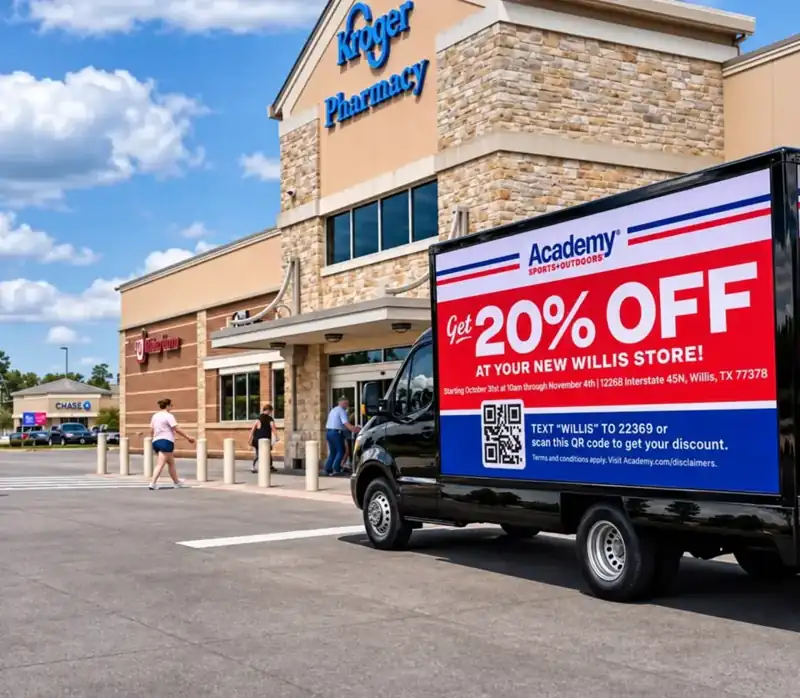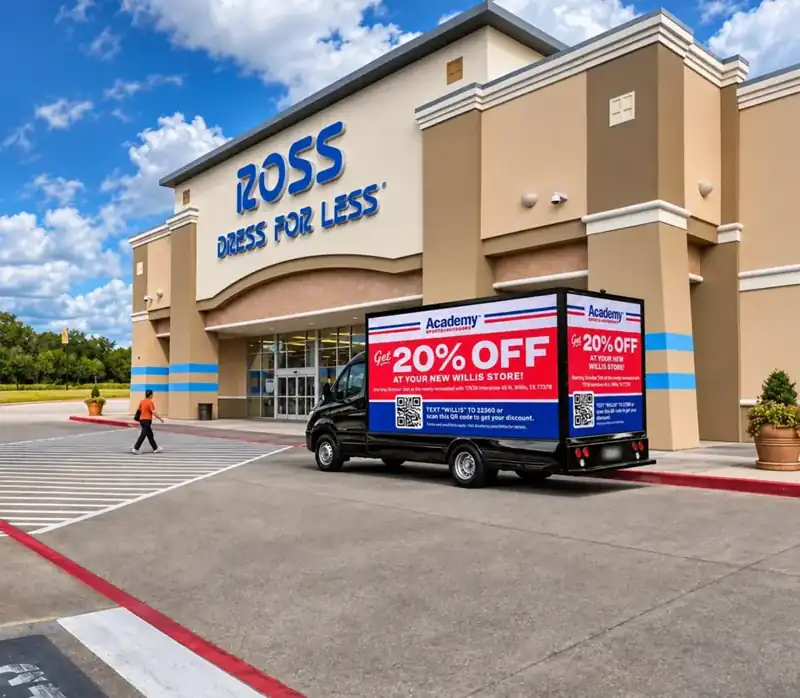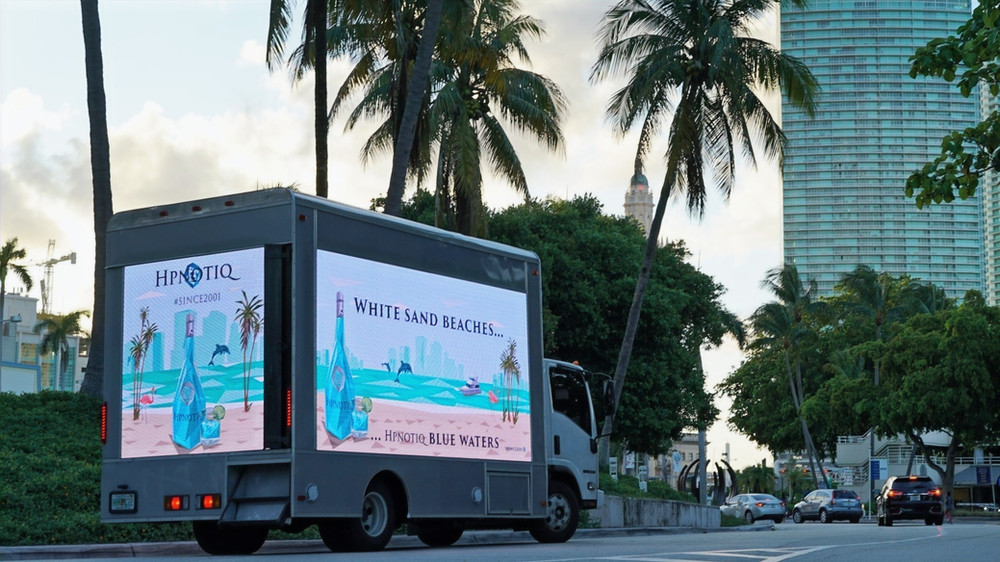
A new location has a short window to introduce itself to the neighborhood. The sign may be ready and social posts scheduled, but people several blocks away still may not know what opened. A digital mobile billboard truck can carry a concise opening message along public roads near the intended audience, then move with the day’s traffic and activity.
The useful question is not simply how many hours to book. It is where the right people will be, when they can act on the message and what the truck should ask them to do. A route that reaches the wrong side of town or a screen full of small text can waste a well-timed launch.
Why digital mobile billboards can work for a grand opening
A grand opening has a specific job: turn “I didn’t know you were here” into “I know where to go.” Digital mobile billboard trucks can help by bringing a large, visible message into the customer area around the new location. The strongest campaign connects four things: the right neighborhood, a useful operating window, a clear reason to visit and an easy way to find the business.
Make the new location easier to recognize
A storefront sign serves people who already pass the business. A truck can introduce the name and opening message along selected nearby streets, giving the brand another way to be seen before a potential customer reaches the storefront. Keep the artwork consistent with your signs, social posts and opening invitation so people can recognize the same business across those encounters.
Put the invitation near the opportunity to act
For an opening-day promotion, the timing should match when the doors are open, staff are ready and the offer is available. A restaurant can focus its request on relevant meal windows; a retailer can align the campaign with its launch event. Proximity and timing give an interested person a practical next step.
Move the message from “Coming Soon” to “Now Open”
Digital artwork allows different approved messages to support the launch sequence. Introduce the date before opening, show the event or invitation on launch day, and reinforce the location afterward. Confirm creative versions and change timing in the campaign scope so the screen message matches what the store is actually offering.
What does the research say about outdoor advertising and store visits?
In a September 2026 report, OAAA shared Harris Poll findings on retail out-of-home advertising. Among the reported responses, 33% said they would visit a store in person after seeing a retail OOH advertisement that interested them, while 45% would visit the retailer’s website or app. The study’s analysis focused on 1,474 U.S. adults ages 18–64, surveyed August 4–5, 2026.
These are stated intentions about retail outdoor advertising broadly, not measured conversion rates for mobile billboard trucks or grand openings. For an opening campaign, our practical takeaway is to make both responses easy: show a useful store destination and connect the creative to a helpful online page.
Read the OAAA/Harris Poll retail research and methodology →
Define one opening-week goal
Decide whether the campaign is meant to announce the address, drive visits to an event, promote an opening offer, book appointments or build recognition for a new branch. The answer changes the creative and the schedule. A restaurant might emphasize its opening date and location; a service business may need a phone or short booking URL; a retail store can direct people toward a limited weekend event.
Choose a response you can track. A short landing page, a dedicated QR destination for people who are stopped, an opening-week code or a question at checkout can help connect activity to the campaign. GPS route documentation confirms where the truck operated; it does not by itself count customers or prove sales.
Map the audience around the location
Start with the business address and identify the customer groups that are realistically close enough to visit. Look at surrounding retail corridors, office districts, residential approaches, schools or campuses where appropriate, and related businesses. Then narrow the route to the public roads that put the screen in front of that audience. Do not assume a truck can stage on private property or stop wherever a photograph looks appealing.
For a location near a busy event district, use the relevant arrival and departure windows only if that crowd is a plausible customer. Event traffic can also bring road closures and long delays. A slower, reliable neighborhood loop may serve a grand opening better than a distant stadium route.
Build the campaign in three phases
Before opening: make the location familiar
A short advance period can introduce the brand and opening date. Keep the message simple: business name, what it offers, neighborhood and date. If the precise address is hard to read at street speed, use a short URL or familiar landmark in supporting channels. Check all creative and route details before the launch day.
Opening day: focus on the useful hours
Operate when customers can actually visit or take the next step. For a lunch business, midday may matter more than an early commute; for a family retail opening, a weekend afternoon may be more useful. Coordinate the truck with any in-store event, staff coverage and promotional inventory. Leave enough travel time between route segments and allow for congestion.
After opening: reinforce the new habit
A follow-up block can reach people who saw the announcement but did not come on day one. Update the screen to “Now Open,” show the neighborhood and give one clear action. Measure store visits, calls, bookings or code use by daypart so future operating hours are based on actual response.
Make the creative readable in seconds
Use one headline, one strong visual and one next step. “Now Open in [Neighborhood]” is easier to grasp than a list of every product or service. Large type and high contrast matter because viewers encounter the message briefly and at different distances. Test the artwork on the actual LED screen specifications before approving it.
A QR code is useful for pedestrians or people who are stopped, but it should not ask drivers to scan while moving. Pair it with a memorable URL or a recognizable search phrase. If a special offer is involved, put the important limitation on the destination page and make the on-screen claim accurate.
Give each launch message one job
The following are illustrative creative directions. Replace the business details and any offer with your own approved information:
- Before opening: “Your new neighborhood coffee stop. Opening Saturday.” Use the business name and a readable location or short web address.
- Opening day: “Now open. Visit us today.” Make the location and opening hours easy to find on the destination page.
- Opening-week follow-up: “We’re open in your neighborhood.” Reinforce the address, main product or service, and one reason to visit or book.
A clear invitation can support a restaurant, retailer, salon, gym, service business or franchise launch. A complicated promotion needs a fuller landing page; the screen should introduce the useful benefit and next step.
Choose the right campaign format
A dedicated truck gives the business control over its campaign dates, operating hours and target areas, subject to local rules and availability. It is a good fit for a specific opening weekend, multiple neighborhood blocks or a changing message. Review exclusive mobile billboard campaigns for that approach.
A shared route may make sense when the goal is repeated local awareness in a market with an active program and available category space. It does not give one advertiser the entire screen schedule or control of the route. The current special-offer page explains the quoted Exclusive Use and Shared Campaign starting options and their terms; request availability for the actual market and dates.
Plan for the market, not a generic route
A grand opening in Miami may need separate Brickell, downtown or neighborhood windows. In Nashville, downtown visitor movement differs from surrounding residential and retail corridors. A Dallas plan can lose valuable time crossing the metro if it tries to cover every district in one shift. These guides offer local starting points; the final plan depends on the business location and target audience.
How to tell whether the campaign is helping
Choose the response measures before launch, then review them alongside the operating schedule. The question is whether the campaign is helping people discover and act on the opening—not simply whether the truck attracted attention.
- Store visits and appointments: record foot traffic, bookings or inquiries during relevant opening hours. Separate an event registration from an actual visit where your systems allow it.
- Offer use: a campaign-specific code or checkout question can provide another response signal. Brief staff so the answer is recorded consistently.
- Online response: use a dedicated opening page or campaign link to review visits, directions requests, calls or form submissions. Test the page on a phone before the truck runs.
- Campaign delivery: review the GPS route documentation, operating confirmation and photographs included in the proposal. Those records confirm activity; they do not count shoppers.
Review the full launch picture. Social advertising, email, local publicity, opening offers and word of mouth can all contribute. An opening-day crowd or increase in sales does not by itself isolate the truck’s effect. Keep the observations useful enough to improve the next operating window, creative message or location campaign.
Grand opening brief to send for a quote
- Business address, opening date and normal hours
- The customers you want to reach and how far they are likely to travel
- Any launch event, offer or appointment window
- Preferred campaign dates and dayparts
- Approved logo, short headline and destination link
- Any known event closures, property access or local constraints
- The action you will track after people see the message
With those details, the campaign team can recommend a focused schedule, realistic route and suitable truck count. Confirm the final creative, operating plan, reporting and total price in writing before the campaign starts.
What the campaign photos can teach an advertiser
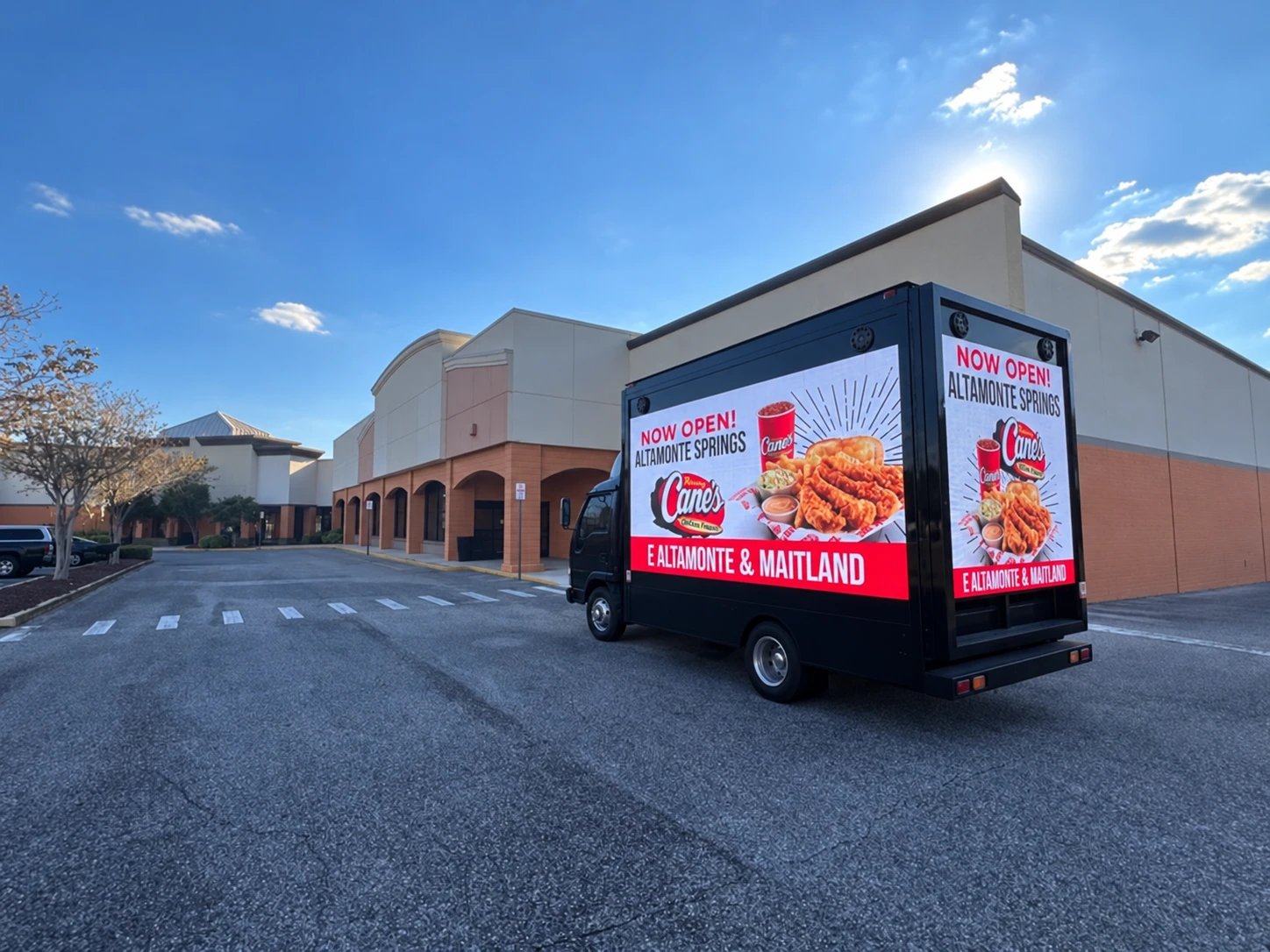
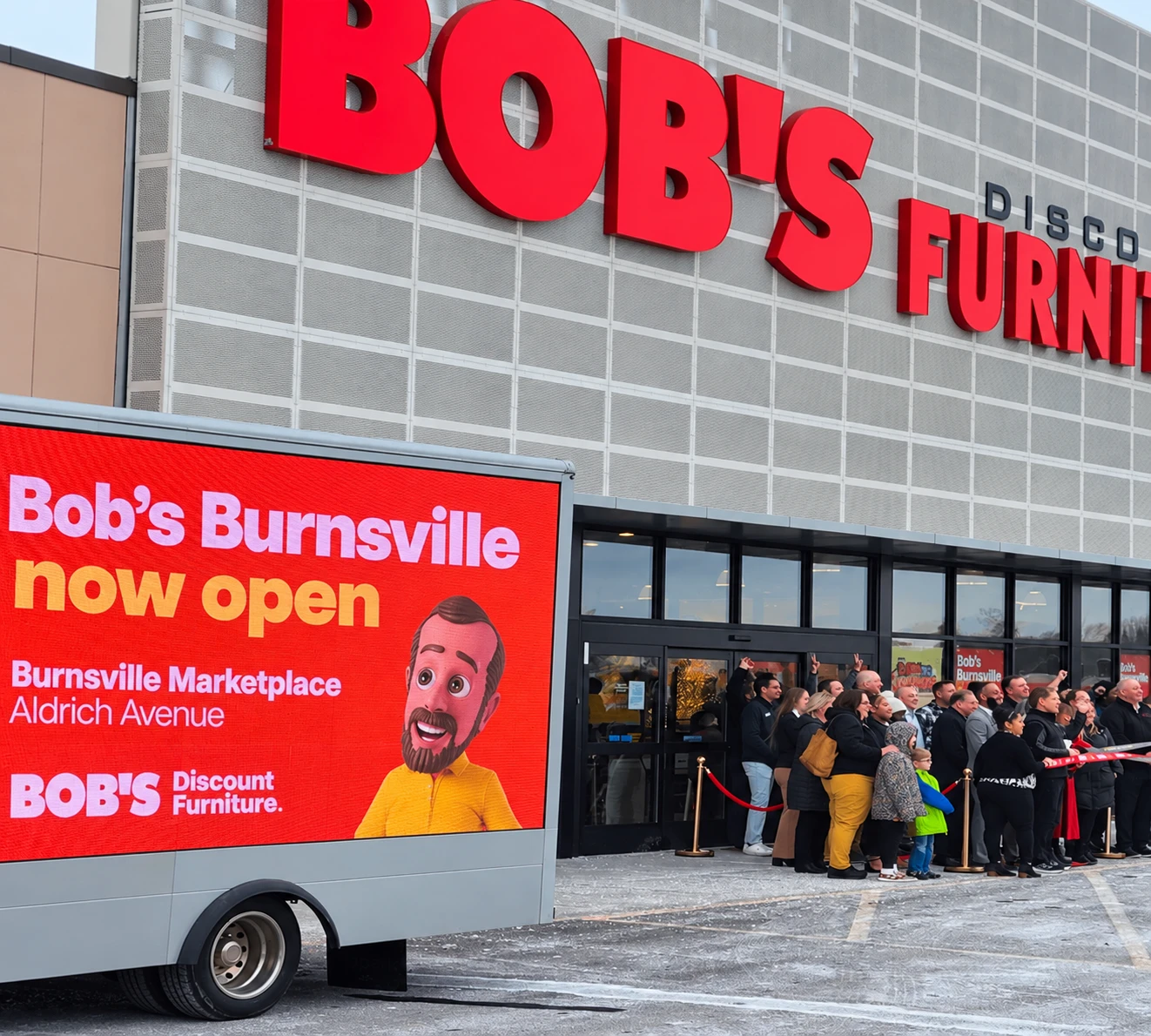
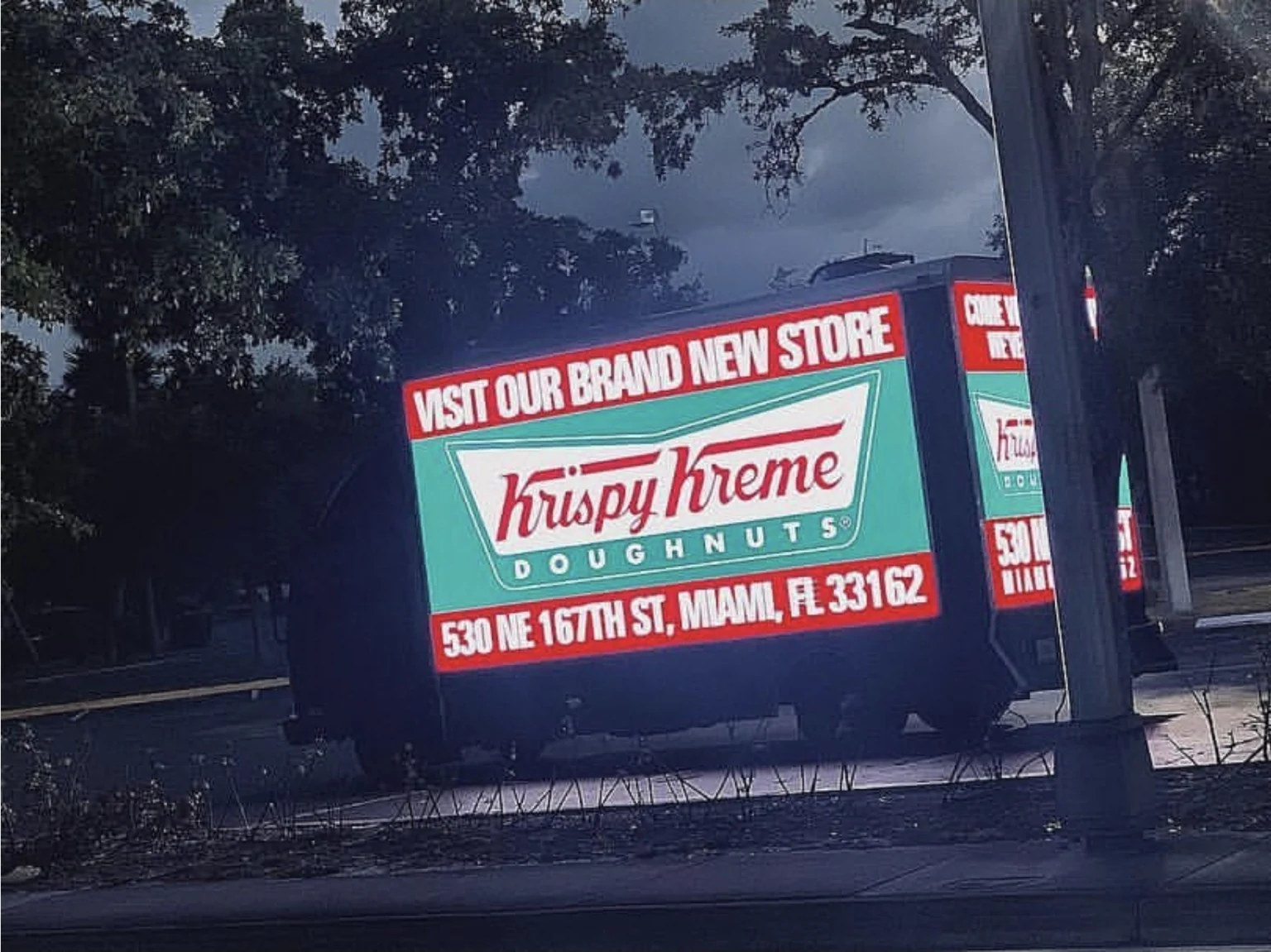
The historical examples below include Floor & Decor in Atlanta, Bob’s Discount Furniture in Burnsville, Krispy Kreme’s Miami opening creative and Raising Cane’s Altamonte Springs opening message. They show how a brand, location and invitation can work together on a moving display.
Use them as creative references, not as evidence of a specific increase in sales or attendance. For more inspiration, explore the campaign gallery. The best version for your opening should reflect your location, audience and actual offer.
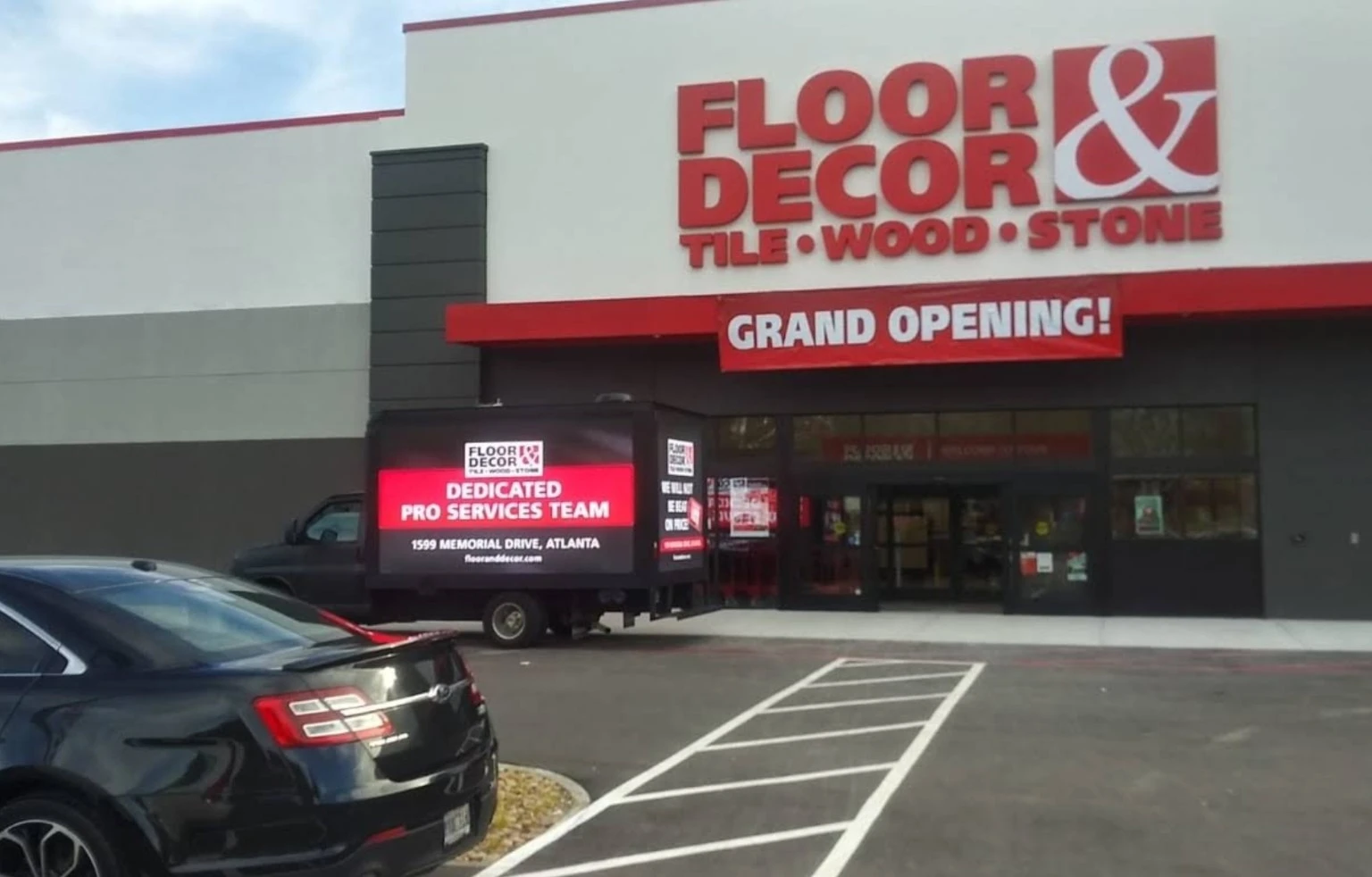
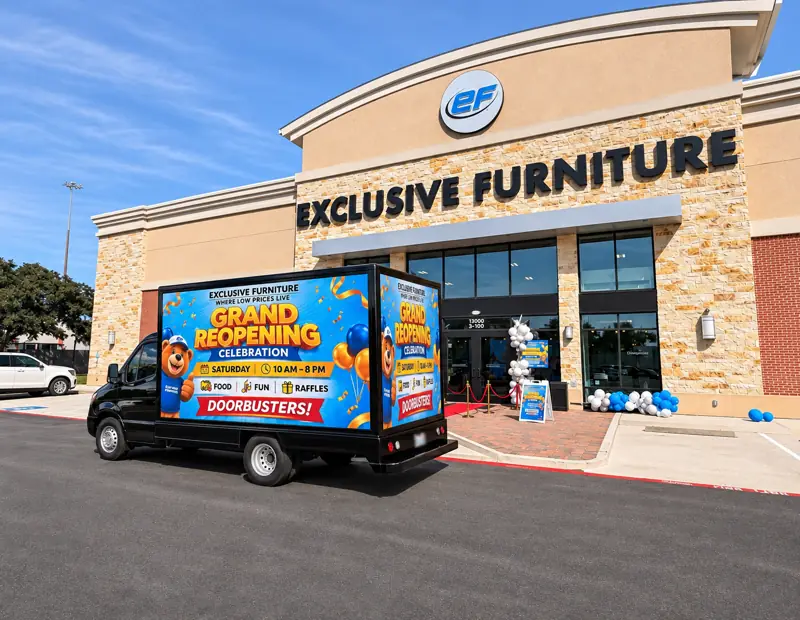
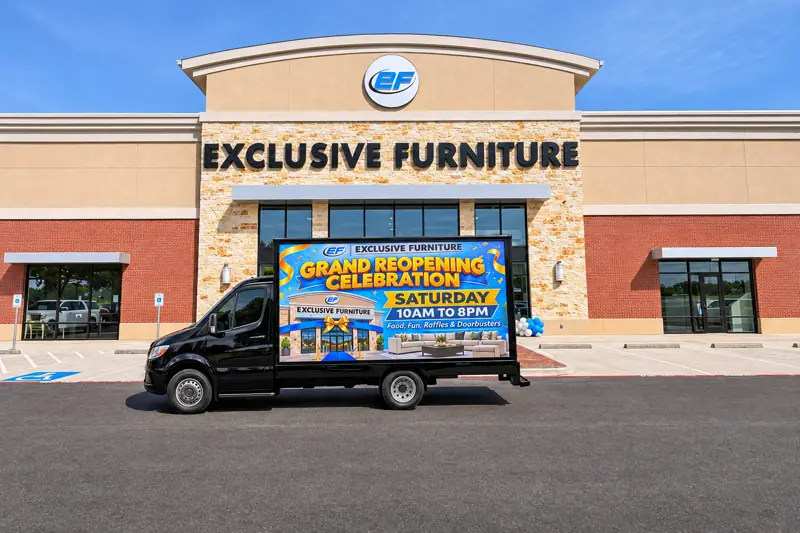
Exclusive Furniture grand reopening campaign
Digital mobile billboard creative announcing a store reopening, with a clear celebration message and event hours. These historical campaign photographs illustrate retail launch advertising; displayed offers are not current.
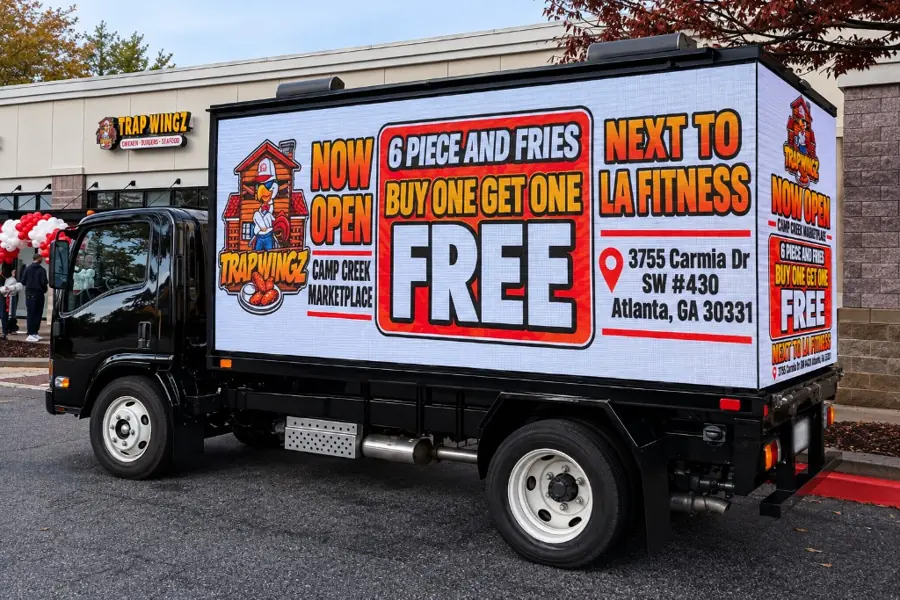
Restaurant and Retail Grand Opening Campaigns
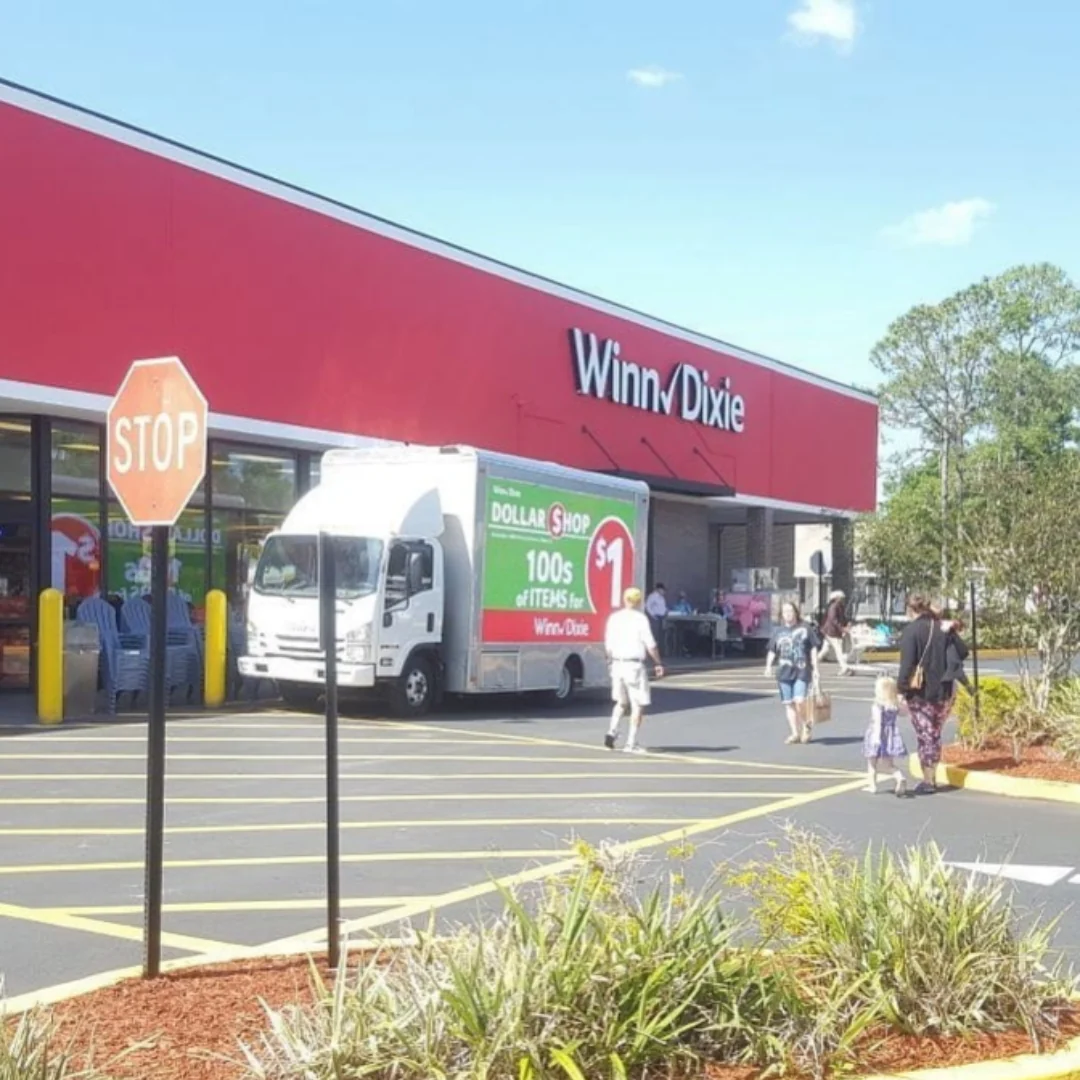
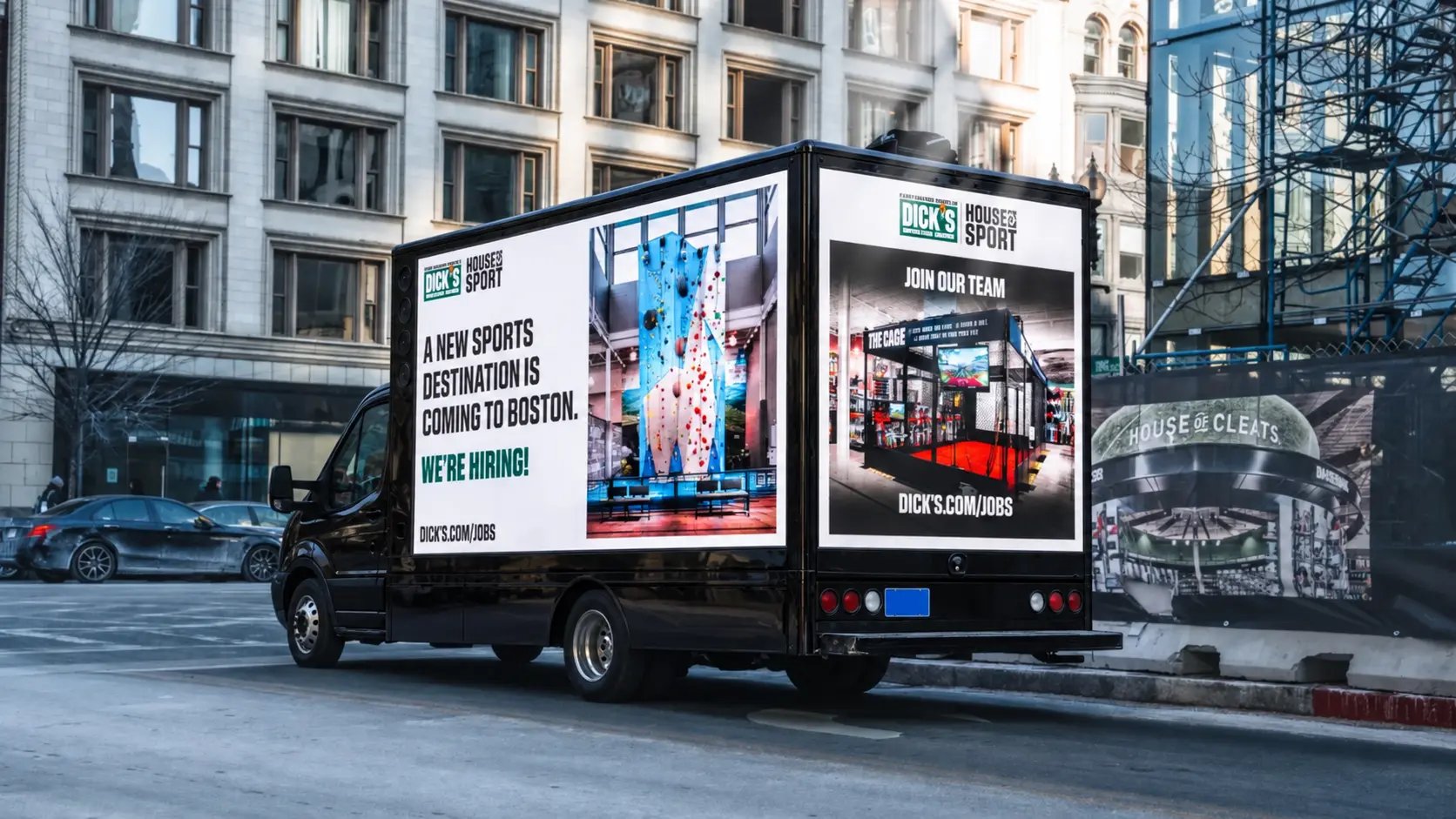
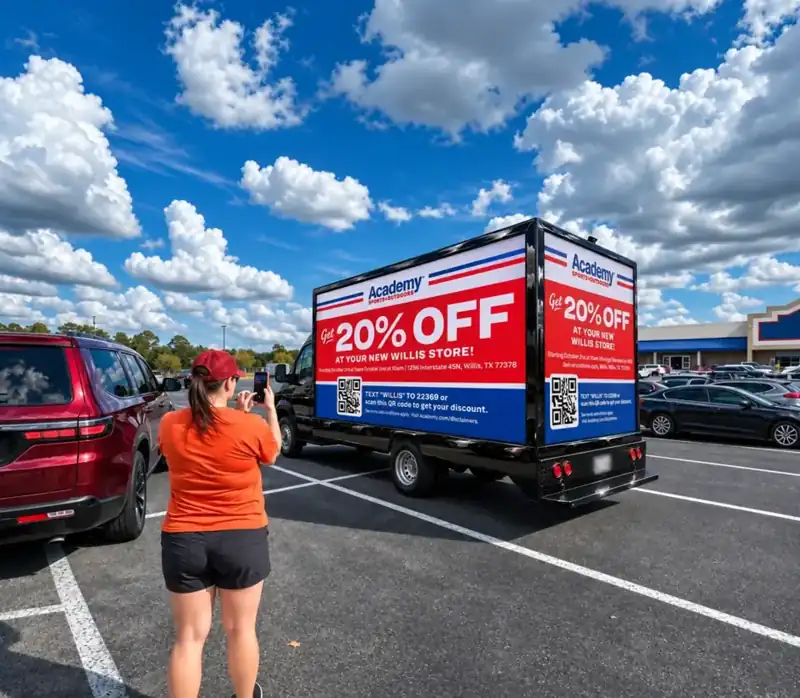
Historical campaign photographs, digitally retouched for truck finish and identifying details. Advertisements and offers reflect past creative.
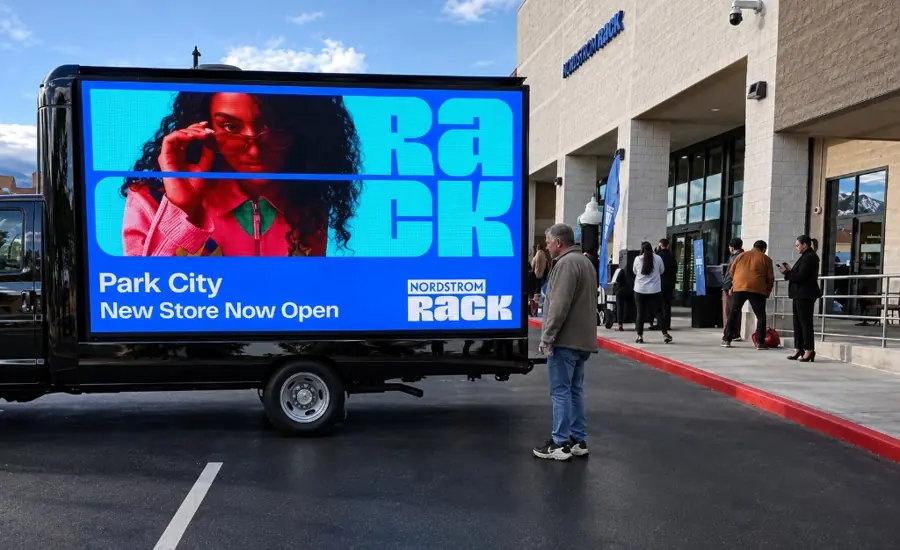
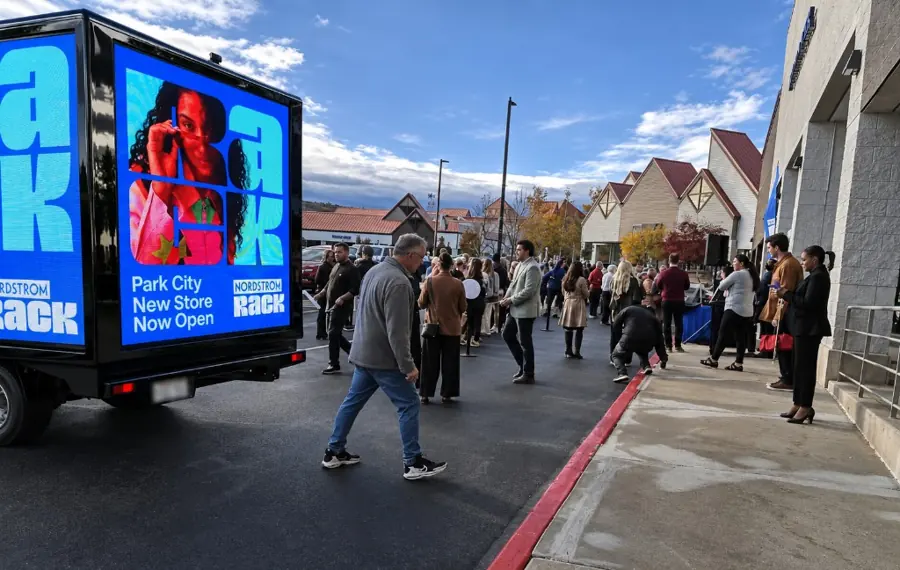
A grand opening campaign in action
Opening a new location?
Send us the market, opening date, target customer and desired hours. We’ll check truck availability and recommend a focused launch plan.
Request a Grand Opening Quote