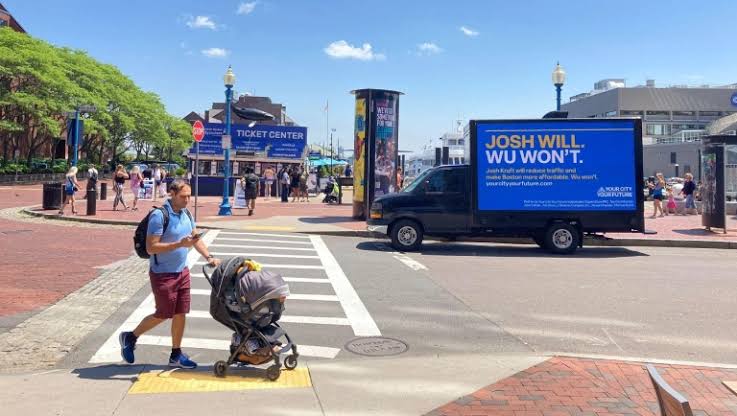
Political campaigns compete for attention across television, streaming, social media, mail, and outdoor advertising. A digital mobile billboard adds a flexible street-level channel: the campaign chooses the operating area, schedule, and creative rotation, then routes the message around the audiences and public events that matter to the campaign.
That mobility can be especially useful in closely contested districts, where strategy may vary by precinct, neighborhood, commuter corridor, campus, or event. The truck does not replace field operations or digital media. It gives the campaign another visible touchpoint that can support awareness, voter information, fundraising, issue advocacy, and get-out-the-vote activity.
1. Plan routes around priority audiences
Campaign teams frequently organize outreach around geography. A mobile billboard can follow that same planning discipline by concentrating operating time around selected neighborhoods, commercial corridors, campuses, civic centers, transit areas, and approved event zones.
- Precinct and district planning: Build routes around the places included in the campaign’s lawful targeting and field strategy.
- Daypart planning: Coordinate commuter routes, lunchtime visibility, evening activity, and weekend events.
- Event planning: Schedule visibility around rallies, debates, conventions, festivals, sports venues, and community gatherings where local rules allow.
- Flexible routing: Adjust the route when traffic, street closures, weather, security restrictions, or event conditions change.
Marked cities on our coverage page are examples—not boundaries. Political campaigns can request service nationwide, including smaller communities and areas between major markets, subject to truck and date availability.
2. Change creative as the campaign changes
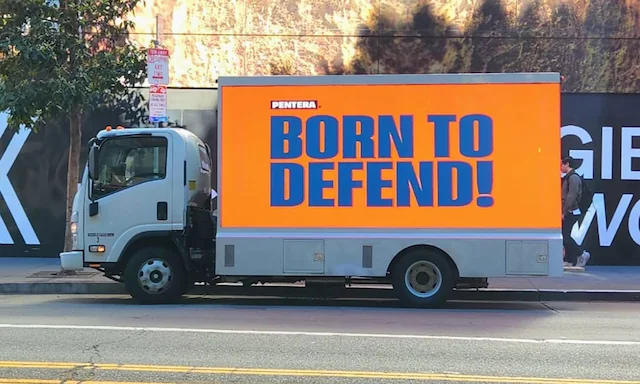
Digital screens allow campaign-supplied creative to be changed without reprinting a physical billboard. Subject to production deadlines and approval, a campaign can rotate several messages or update creative as dates and priorities change.
- Registration and vote-by-mail deadline reminders
- Early-voting and Election Day messages
- Candidate introductions and endorsements
- Issue or ballot-measure education
- Event announcements and schedule updates
- Short URLs or QR codes leading to official campaign resources
For voter-information creative, use official state and local election sources. The U.S. Election Assistance Commission notes that election administration varies by state and territory and advises voters to verify registration information and timelines through the linked state and local offices.
3. Design for immediate recognition
A moving display must communicate quickly. Use one main idea, large type, strong contrast, recognizable campaign branding, and one clear action. Avoid adapting a dense mailer or social post directly to the truck screen. If a legal disclaimer is required, plan for it at the start so it remains legible within the final creative.
Campaigns can rotate complementary creative—for example, a candidate message, a voting-deadline reminder, and an event notice—while keeping the visual identity consistent. A short, memorable URL is often easier to understand from the street than a long web address.
4. Coordinate mobile outdoor with the rest of the campaign
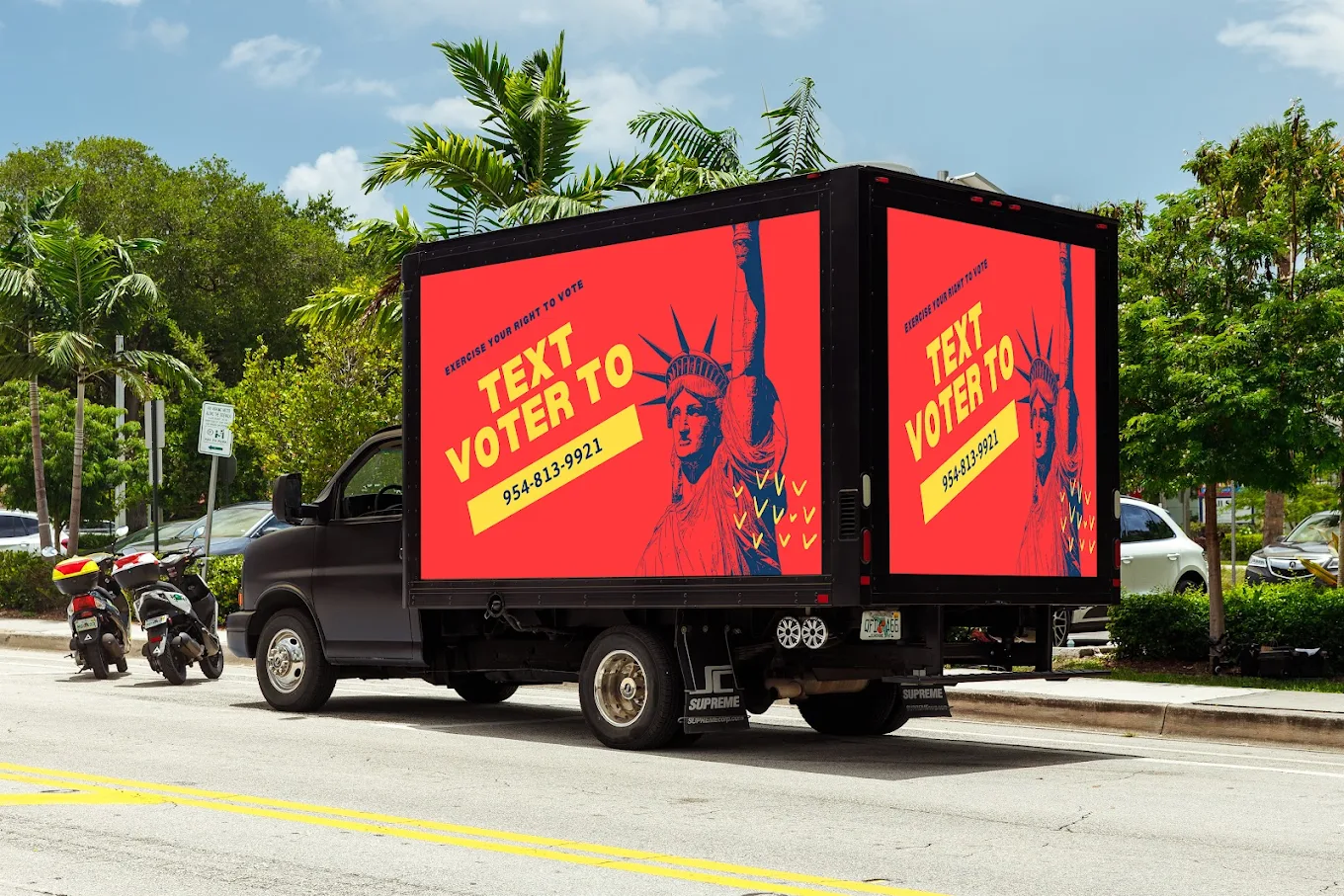
The truck can reinforce the same message used in field outreach, campaign events, mail, email, and digital advertising. Campaign-specific tracking—such as a dedicated landing page, short URL, QR code, phone number, or response code—can help the organization observe actions connected with the creative.
A mobile billboard can also create photo and video opportunities for the campaign’s own social channels. Organic sharing is possible, but it is not guaranteed; campaigns should treat it as an added opportunity rather than a promised result.
5. Match the deployment to the race and objective
Political mobile billboard campaigns can range from a focused one-day activation to a multi-week, multi-market program. A local race may prioritize a compact district and community events. A statewide campaign may coordinate several cities or trucks. A national organization may schedule synchronized activations in multiple markets.
Pricing depends on the market, dates, truck availability, operating hours, number of trucks, route complexity, and creative requirements. Because those variables differ, avoid assuming a universal cost per impression or guaranteed return. Request a quote based on the actual campaign plan.
Three useful campaign formats
GOTV and voter-information deployment
Schedule routes during registration, early-voting, and Election Day periods. Creative should direct voters to current official information rather than relying on copied deadlines or polling-place details that may change.
Issue and ballot-measure outreach
Use concise creative to introduce an issue, identify the sponsoring organization, and direct viewers to a page with fuller information. Confirm the disclosure and reporting rules that apply to the sponsoring organization and jurisdiction.
Event and rally support
Build visibility around permitted routes near campaign events, debates, conventions, and public gatherings. Routes and staging must account for local traffic rules, venue restrictions, security zones, and any required permits.
Political advertising compliance matters
For federal elections, the Federal Election Commission treats outdoor advertising facilities as public communications. Covered communications may require a clear and conspicuous disclaimer identifying the payor and, when applicable, whether the message was authorized by a candidate or campaign. Independent expenditures have additional disclaimer and reporting considerations.
Rules can differ for federal, state, and local elections, and placement or vehicle-operation rules may also vary by jurisdiction. Campaigns and sponsors are responsible for legal review, required disclaimers, reporting, permits, and the accuracy of voter information. This article is general advertising information, not legal advice.
What to include in a political campaign quote request
- Candidate, committee, PAC, party, advocacy organization, or ballot-measure sponsor
- Target city, district, state, or multi-market plan
- Campaign dates and key election milestones
- Preferred operating hours and number of trucks
- Priority neighborhoods, routes, venues, or events
- Campaign objective and intended call to action
- Creative status and required approval process
Put your political message in motion.
Tell us the market, dates, audience, and campaign objective. We will review truck availability and help map an appropriate route and schedule.
Request a Political Campaign Quote