
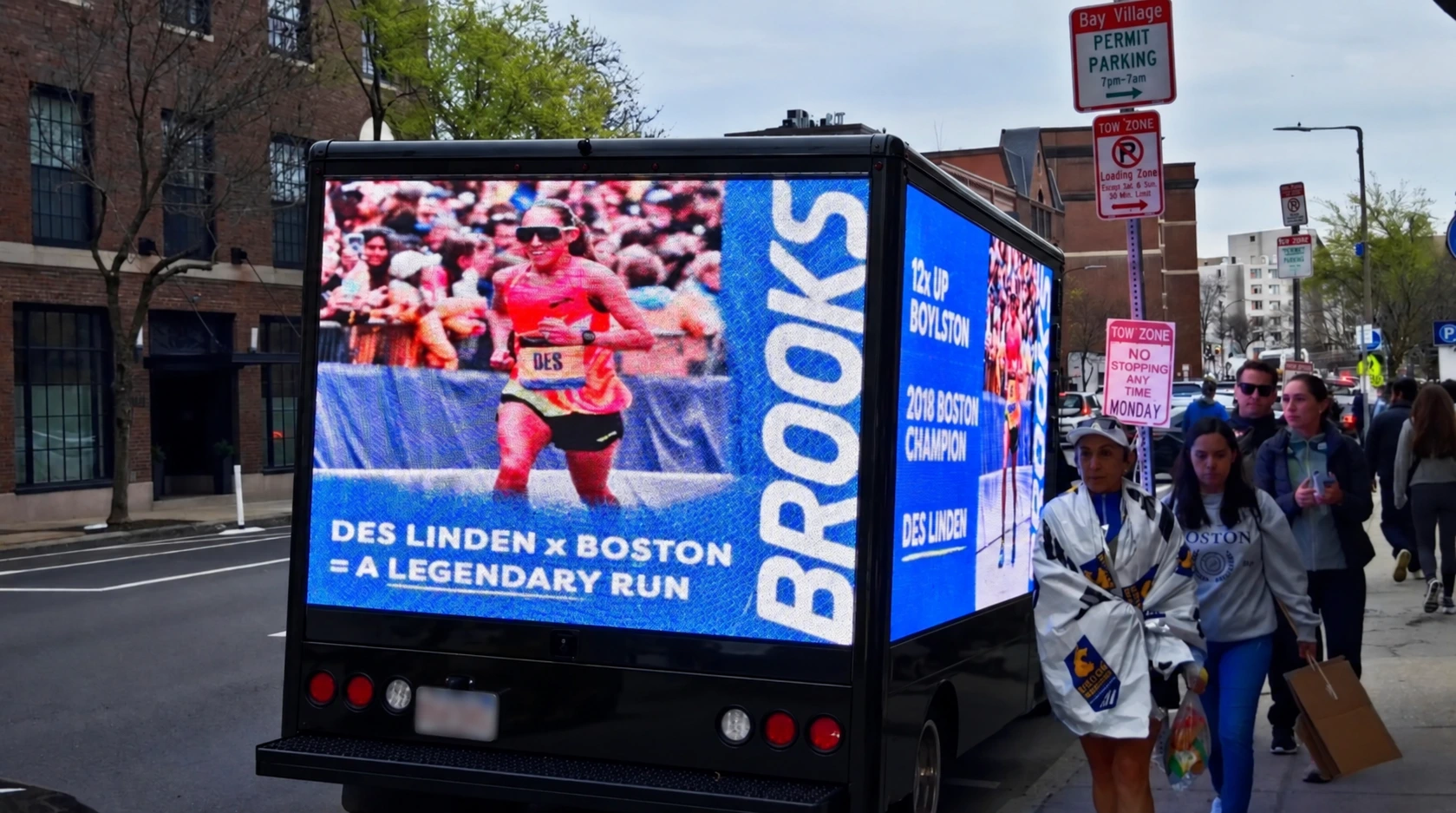
An event campaign works best when attention has somewhere useful to go. Around a marathon, people may be choosing breakfast, visiting a store, meeting friends or planning a post-race meal. Digital mobile billboard trucks can connect a brand message with those decisions through readable LED creative and a reviewed operating schedule. The goal is a relevant next step, rather than simply displaying an advertisement wherever a crowd gathers.
The Boston Athletic Association lists the next Boston Marathon for Monday, April 19, 2027. For advertisers, that date is a starting point for planning. It does not establish truck availability, street access or permission to use event branding.
Think beyond the finish line
A running event creates different customer moments before, during and after race day. An athletic retailer might invite visitors to an independently organized store appointment. A restaurant could highlight a meal at a confirmed address. A consumer brand may introduce a product through a simple message that continues onto its website.
Boston needs a geographically precise brief. A Back Bay business destination and a separate Greater Boston activation should have their own requested hours. The organizer describes a point-to-point course from Hopkinton to Boston; that race geography is not a driving itinerary for advertising trucks. Use our Boston campaign guide to frame the market request, then review the specific areas with the team.
Who can use event-focused mobile advertising?
- Running, fitness and outdoor brands: introduce a product or invite customers to a verified store activity with one clear response.
- Restaurants and hospitality businesses: promote a real destination with service hours that match the audience's plans.
- Retailers and local services: connect a relevant customer need with an appointment, store visit or short website address.
- Nonprofits and community organizations: explain a mission and direct people to their own information or donation page, without implying official charity status.
- Agencies and event teams: coordinate an outdoor message with a separately authorized activation, landing page or broader media plan.
The event name alone does not establish audience fit. Decide whether the campaign is speaking to runners, companions, local residents or business customers. A message designed for all four may be less useful than one that gives a specific group a clear reason to act.
Give each operating window a purpose
Before race day: consider awareness, appointments and customer planning. A store invitation should include its actual location and valid hours. A preparation-focused offer needs enough lead time for someone to respond. Confirm any activation details before putting them on the screens.
On race day: prioritize operational feasibility. Do not build a plan around following runners, entering a closed street or stopping near a finish area. If suitable public-road operation is possible, identify the customer destination and the relevant time block. Choose an alternate window when restrictions make the original request unsuitable.
After the event: match the invitation to what remains available. A dining message needs current opening hours; a brand story may work better with a website response. Do not depend on an exact finishing time or assume people will travel across the city to redeem an offer.
Keep LED creative clear and connected
Start with one headline, a recognizable brand and one action. A short message such as “Visit our Boston store” needs a readable destination, not a paragraph of product details. Use strong contrast and review the artwork at a small size before approving it for the truck.
A QR code can offer a next step where people can safely pause and scan. It should not be the only response option for a moving audience. Include a memorable URL or simple destination and check the page on a phone. Our creative guide and QR-code planning article explain how to keep the response practical.
Plan access separately from audience interest
The B.A.A.'s spectator information includes course and road-closure guidance. As checked October 25, 2026, that page still contains detailed 2026 spectator materials. Do not reuse those closure hours as a confirmed 2027 operating schedule. Review current organizer and municipal notices when the campaign dates approach.
Truck suitability, clearance, loading, pedestrian movement, lawful stopping and authorized staging all need review. Private-property access is separate. An independent advertising campaign does not include race affiliation, sponsorship, course entry, finish-line placement or a guaranteed route.
Measure a response you can actually verify
Choose the response before the campaign launches: a dedicated landing-page visit, appointment request or tracked inquiry, for example. Confirm that the form works and preserve source information where appropriate. Review delivery records separately from customer responses. A truck's operating record does not prove a person saw an advertisement, and website visits do not automatically prove campaign attribution.
For a wider plan, compare event advertising and dedicated truck campaigns. Review campaign pricing factors rather than assuming a general starting price covers a particular Boston event request.
Build your event campaign brief
Send the dates, intended audience, business destination, preferred operating windows, creative and desired response. Browse the event directory and location guides for related planning resources. The Digital Mobile Billboard Company can review the request and discuss suitable options, subject to availability and operating conditions.
Get a Free Quotecall 844-344-4586
Independent advertiser planning guide. The Digital Mobile Billboard Company is not affiliated with or endorsed by the Boston Athletic Association or Boston Marathon. Historical campaign imagery illustrates the advertising format and does not establish current event access or a future placement.