
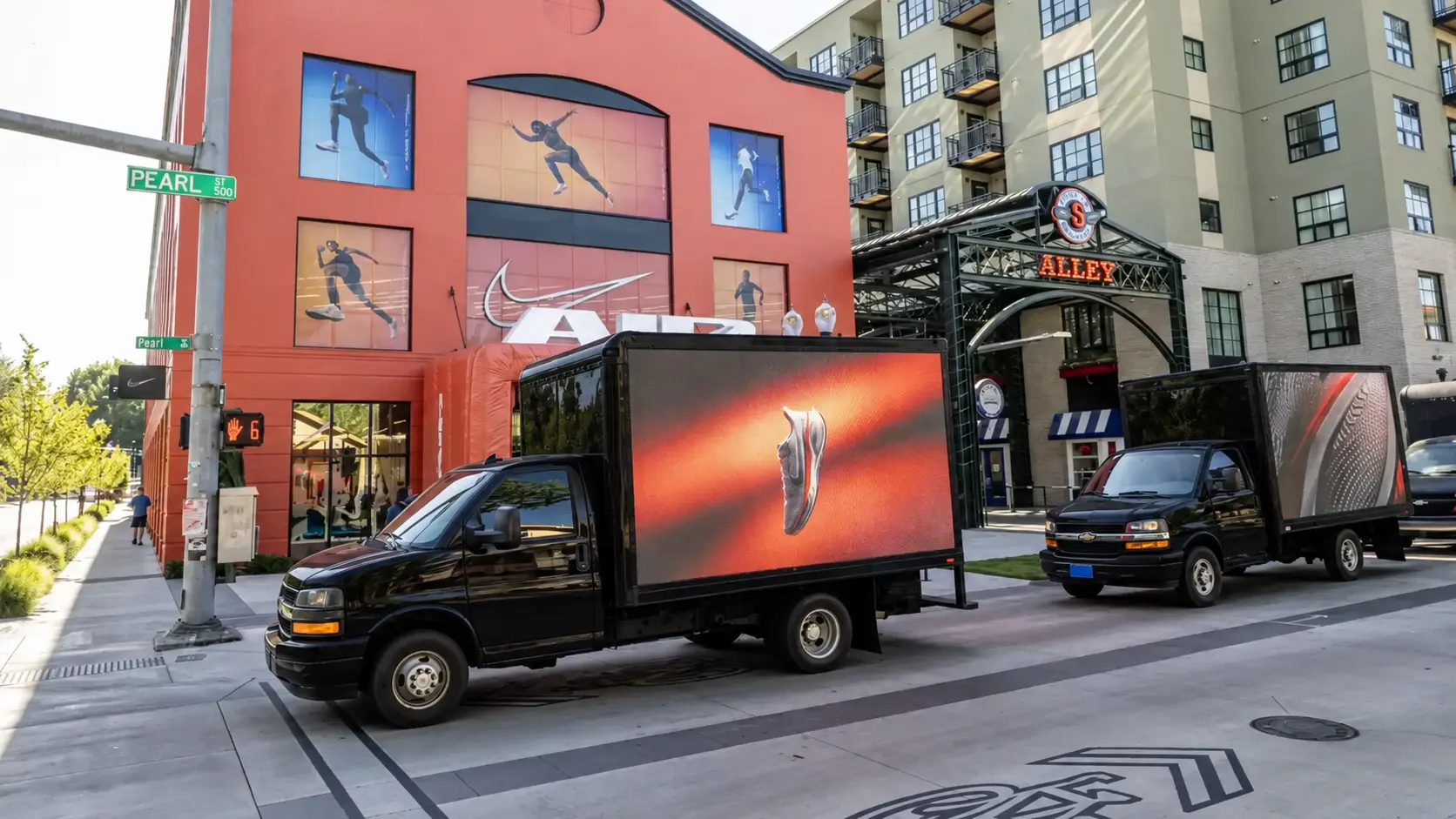
A useful mobile billboard quote starts with a decision: what should the campaign help someone do? A store visit, a business meeting and an online inquiry require different messages and operating plans. Sending a clear brief gives the campaign team a practical starting point and helps you compare recommendations on the same basis.
This guide explains what to prepare before requesting digital mobile billboard advertising. It applies to local businesses, agencies and event exhibitors planning one market or several. It is a planning checklist, not a promise of truck availability, access or results.
1. Name one customer response
Choose the action that matters most. A retailer might want people to visit a particular store. A business-services company could invite qualified prospects to book a demonstration. A community organization may direct readers to an information page. Write that response in one sentence before discussing truck count.
Make sure the destination can support the invitation. Check store hours, appointment capacity and the landing page on a phone. A compelling screen message cannot repair an unavailable offer or a form that does not work. For practical examples, explore our event advertising options.
2. Describe the audience and the actual market
“Everyone in the city” gives the team little guidance. Identify the people most likely to find the message useful: nearby shoppers, convention professionals, local service customers or visitors with a particular reason to be in town. Then name the business destination or requested operating areas.
Keep separate audiences separate. A convention invitation and a neighborhood retail offer may need different schedules, artwork and responses. Our location guides can help you frame the request, but a listed landmark does not establish an approved truck route or access to its property.
3. Supply dates and useful operating windows
Provide the preferred dates, any acceptable alternatives and the hours when the message would be relevant. If the campaign supports an event, include the organizer's official schedule rather than relying on an old social post. State whether you want awareness before the event, a customer invitation during it or a follow-up afterward.
For example, the organizer lists the National Restaurant Association Show at McCormick Place in Chicago for May 22–25, 2027. A restaurant-technology supplier could brief a meeting invitation around that professional audience. The show date informs the brief; it does not grant venue access, organizer affiliation or a truck position beside an entrance.
4. Request areas for review, not a guaranteed route
Describe the areas you want considered and why they fit your audience. Include any separately authorized private activation location. The operating review needs to consider truck clearance, turning space, loading activity, current traffic controls, pedestrian movement and lawful stopping or staging.
Do not assume a visitor garage, pedestrian path or event parking lot accepts advertising vehicles. If the preferred area is unsuitable, ask about alternative areas or time blocks. For several cities, allow separate operating schedules and transfer time rather than treating a map of destinations as a continuous loop.
5. Match the creative to the response
Start with one headline, a recognizable brand and one next step. Prepare your approved logo, artwork and destination link. Ask for the production specifications before exporting final files, and identify who can approve revisions so artwork does not wait in an inbox.
A QR code can be useful when someone can safely pause and scan. Include a readable alternative, such as a short URL, for people who cannot scan. Our creative guide and QR-code planning guide provide more detail. Avoid filling every screen with competing offers.
6. Compare scope before comparing price
Ask what the recommendation includes: operating dates and hours, truck count, travel, creative preparation, delivery records and any separately priced work. A short local request and a coordinated multi-market campaign should not be compared only by the headline amount.
Review our pricing guide and dedicated campaign options. If your objective is ongoing participation in a shared Miami program, review ELITE 305 separately. They are different buying decisions. Confirm the written scope and current quote before committing.
7. Decide how follow-up will work
Supply a working email address and phone number, plus the person authorized to approve the campaign. Choose a response measure before launch, such as qualified form submissions or booked appointments. Keep delivery records separate from customer outcomes; neither a truck's operating hours nor a website visit proves a sale.
A focused brief reduces avoidable back-and-forth. Browse the event directory, identify the market, and send your objective, dates, operating windows and creative status. Get a Free Quote or call 844-344-4586 to discuss a reviewed recommendation. Availability and operating conditions must be confirmed before a campaign is booked.